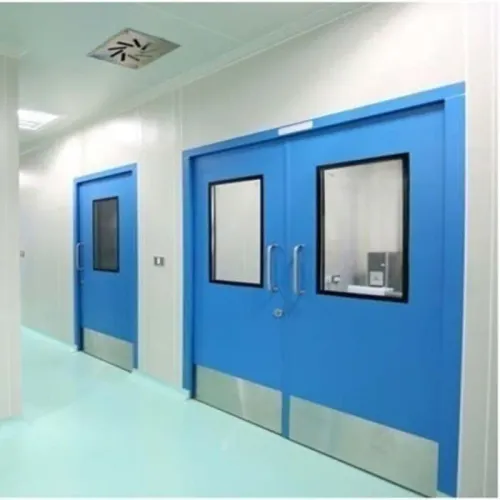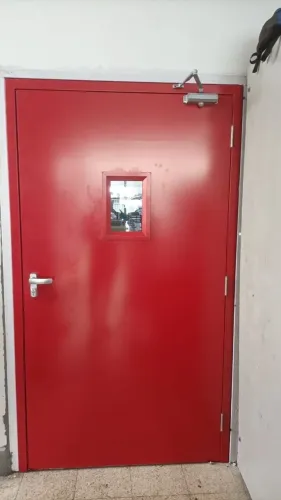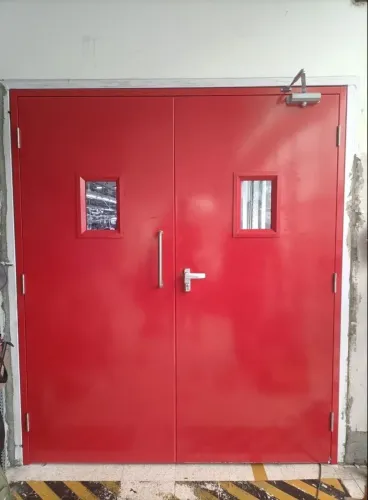
A laboratory partition door is not compliant because its glass carries a fire label: the complete leaf, frame, glazing system, hardware and wall connection must match tested evidence. By the end, you will have a practical schedule for rating, cleanroom operation, documentation and approval of a glazed doorset in Coimbatore.
Key takeaways
- Request evidence for the complete doorset, not the glass alone.
- Match glazing size, frame and configuration to the tested assembly.
- Check wall, cleanroom, smoke-control and hardware compatibility before ordering.
- Confirm Coimbatore acceptance requirements before approving fabrication.
Specify the complete fire-rated doorset, not the glass alone
A pharmaceutical glazed doors specification needs evidence for the complete fire-rated doorset, not a certificate for the glass alone. Request a test report or classification report identifying the exact assembly and its approved installation method.
Specify evidence covering:
- Leaf
- Frame
- Glass
- Glazing bead
- Edge cover
- Setting blocks
- Intumescent or smoke seals
- Hinges
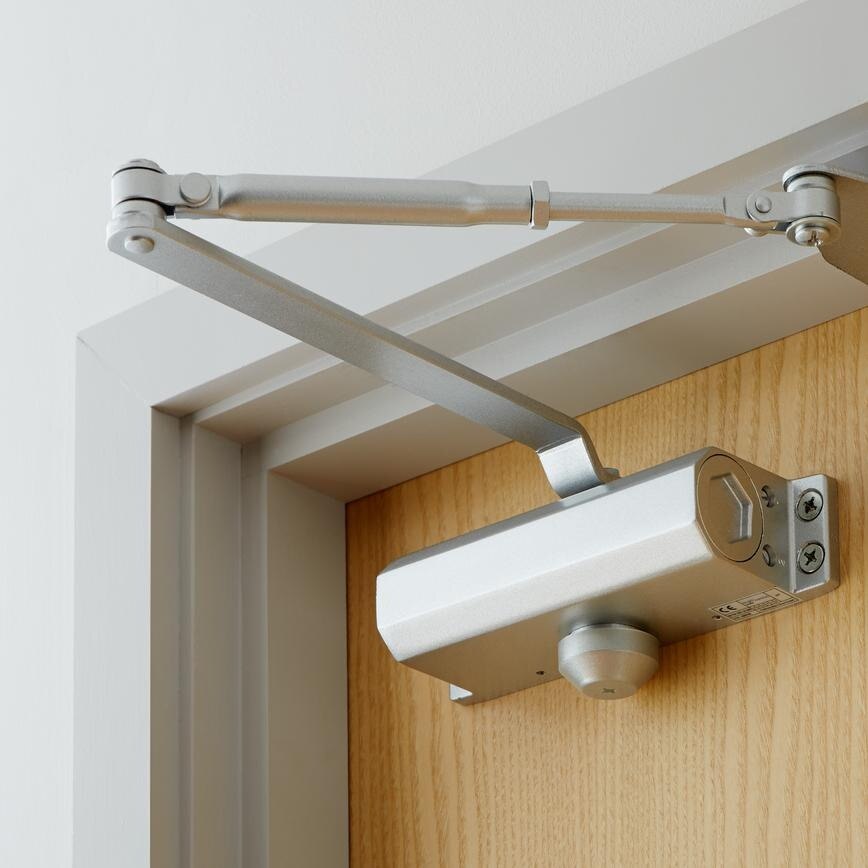
- Closer
- Lock
- Installation method
These parts work together in the furnace. Changing the bead, seal, hardware, frame anchorage or frame-to-partition junction can invalidate the result, even when the replacement glass carries its own fire certificate. A factory-tested fire rated glazed door is therefore different from a site-assembled door, generic partition frame and separately sourced glazing.
Confirm the pharmaceutical laboratory partition’s fire rating and the governing code before selecting minutes. Then identify integrity E, which limits flames and hot gases passing through, and insulation I, which limits heat transfer to the unexposed face. A door marked E alone must not be described as an insulated fire barrier.
EN 1634-1 covers fire resistance for door, shutter and openable-window assemblies. EN 1634-3 covers smoke-control performance. Request both classifications when smoke leakage matters; a fire-rated doorset is not automatically smoke-control or cleanroom-rated. The same evidence should name the tested configuration for pharmaceutical glazed doors, rather than relying on a nominal 60-, 90- or 120-minute claim.
Match the glass, vision panel and configuration to tested limits
Accept only the glass and configuration covered by the doorset’s fire test; a visually similar pane can invalidate the evidence.
| Option | Fire behaviour | Practical difference |
|---|---|---|
| Wired glass | Commonly integrity-focused; insulation depends on the tested assembly | Wire pattern remains visible, with restricted tested sizes |
| Ceramic glass | Integrity, with insulation only where the test confirms it | Clearer appearance than wired glass; thickness and pane limits vary |
| Intumescent laminated glass | Can provide integrity and insulation | Clear in normal conditions, but layers react and obscure vision during fire exposure |
| Gel-filled or composite systems | Can provide both criteria within a proprietary assembly | Optical appearance, thickness and maximum pane size are system-specific |
Ask for the exact approved glass type and thickness, visible pane dimensions, aspect ratio, glazing orientation, edge cover, setting blocks, glazing bead and frame construction. A certificate naming only “fire-resistant glass” is not enough.
Large vision panels face tighter limits than a single standard leaf. Treat paired leaves, narrow stiles, transoms, overpanels and sidelights as separate tested configurations; combining them can exceed the permitted pane area or weaken the frame interface.
Require the fire rated glazed door manufacturer to state both the maximum glass size and maximum overall assembly size for the quoted configuration. Do not accept only a nominal 60-, 90- or 120-minute rating.
The fire rated glazed door must match the tested leaf, frame, hardware, seals and partition interface, not merely carry an approved pane.
Make the door compatible with the fire wall and cleanroom envelope
Write the partition and laboratory conditions into the door schedule before requesting a quotation. A fire-rated leaf installed in the wrong wall can leave the frame-to-partition junction untested.
1. Record the fire-resisting wall rating, wall construction, structural opening dimensions, frame anchorage, perimeter seal, and the tested interface between frame and partition. State whether the opening includes a transom or sidelight, with each panel’s dimensions, fire performance and fixing method.
Require the complete configuration from the pharmaceutical glazed doors supplier, not a generic frame paired with separately sourced glass.
2. Define the cleanroom envelope: flush faces, sealed joints, concealed or sealed fasteners where practical, minimal ledges and a cleanable frame-to-wall junction. Specify corrosion-resistant hardware and seals that tolerate the facility’s named disinfectants, humidity and cleaning frequency.
A conventional office fire door can pass a fire test yet trap contamination or fail when its seals and hardware degrade.
3. State the pressure regime, door swing, undercut, airflow direction, leakage target and test method, self-closing sequence, and required interlock between rooms or airlocks. Include the air-conditioning operating condition and alarm behaviour so the doors remain compatible with segregation and cross-contamination controls.
ISO 14644-1 measures airborne particle concentration. It does not prove fire resistance, airtightness or hygienic design. A glazed door partition manufacturer must provide evidence for the doorset and its wall interface, because an ISO room classification cannot validate leakage, seals or fire performance.
If the schedule omits these conditions, qualification and maintenance failures can appear after installation.
Coordinate hardware, smoke control and GMP operating requirements
During routine use, the fire rated glazed door must close reliably and engage its latch without staff intervention.
Include the access-control lock, electromagnetic lock, door operator, magnetic hold-open device and alarm-release wiring in the tested or approved configuration; a hold-open device must release on the specified fire alarm or detection signal so the leaf closes during a fire.
Specify door swing, closing sequence, pressure regime, leakage target and interlocking logic for pharmaceutical glazed doors. EU GMP Annex 1 connects airlocks, room segregation, pressure differentials and cross-contamination control, so an interlocked door must preserve the intended pressure cascade without allowing unauthorised simultaneous opening.
ISO 14644-1 particle classification does not prove fire resistance or smoke tightness.
Record fire resistance under the applicable door-assembly test, such as EN 1634-1, separately from smoke leakage. Where smoke control is required, state the smoke classification or test method, such as EN 1634-3; a fire rating alone does not establish smoke performance.
Request these documents before approval:
- Door assembly test report covering the quoted leaf, frame, glazing and hardware
- Field-of-application statement identifying approved sizes, hardware, substitutions and site tolerances
- Product data sheet and hardware schedule
- Glazing certificate naming the glass type, thickness and permitted dimensions
- Smoke-test evidence stating classification and test method
- Installation instructions covering anchorage, seals, wiring and commissioning
Reject documents that rely only on the phrase “fire protection” or omit approved substitutions and installation tolerances.
Obtain Coimbatore acceptance before ordering the doorset
Do not release a purchase order until the project fire consultant, architect, facility owner and authority having jurisdiction agree on the approval route. Obtain the accepted wall rating, opening-protective rating, test standard and written basis for treating Indian, European or North American certificates as equivalent.
Ask each fire rated glazed door manufacturer for the exact tested configuration:
- Leaf, frame, glass, glazing bead, seals, hardware, dimensions and installation method
- Frame anchorage and the tested frame-to-partition, transom and sidelight interfaces
- Maximum overall assembly size and visible glass size, not only a nominal 60-, 90- or 120-minute rating
- Smoke-test evidence, approved substitutions and site tolerances
A fire rated glazed door for pharmaceutical laboratory partition conditions in Coimbatore must also survive operation after handover. Confirm replacement-glass availability, resistance to the facility’s cleaning and disinfection chemicals, humidity exposure, pressure differentials, self-closing and latching operation, and local service response.
| Factory-tested doorset | Site-assembled combination |
|---|---|
| Complete evidence covers the frame, glass, hardware and installation | A fire door, generic partition frame and separately sourced glass may have no combined evidence |
| Test report identifies the wall interface and permitted dimensions | Frame-to-partition, transom or sidelight junction may be untested |
| Supplier can provide approved replacement parts and service | Future substitutions can invalidate the tested configuration |
Use these documents and site-interface details when evaluating Rock Miller Doors or another supplier. A certificate for a different frame or partition does not prove acceptance.
Related products
 | Steel Doors Our clean room doors are extensively used in cleaning workshops, Hospitals, Pharma, Food factories, and so on. View product → |
 | Glazed Doors ROCK MILLER glazed doors are an excellent choice for prominent entrances in situations such as workplaces, schools, retail stores, IT Companies and... View product → |
Frequently asked questions
What evidence should you request for a fire-rated glazed door?
Request a test report or classification report identifying the complete doorset, glazing, frame, hardware and approved installation method.
How do you match glazing to a tested fire-rated doorset?
Check the approved glass type, vision-panel dimensions, frame, leaf construction and configuration against the report’s tested limits.
Why must the door match the pharmaceutical partition and cleanroom envelope?
The doorset must suit the fire-rated wall, opening detail, seals, pressure conditions, hygiene requirements and cleanroom finish.
What must be coordinated before ordering pharmaceutical glazed doors?
Coordinate hinges, closers, locks, access control, smoke seals, hold-open devices, cleaning requirements and GMP operating procedures.
What should you confirm in Coimbatore before approving a fire-rated glazed door?
Confirm the local authority’s acceptance route, required fire documentation, installation details and any project-specific approval conditions.
Related products
 | Fire Door Fire prevention is our top priority for every building designer or architect. View product → |
 | Glazed Doors Depending on the level of protection needed, we may offer a wide range of glass and glazing solutions. View product → |
 | Fire Door Fire Doors with Door Fittings View product → |
 | Lead Lined Doors Lead Lined Doors / X-Ray Doors Radiation cannot be transmitted via lead-lined doors and frames. View product → |