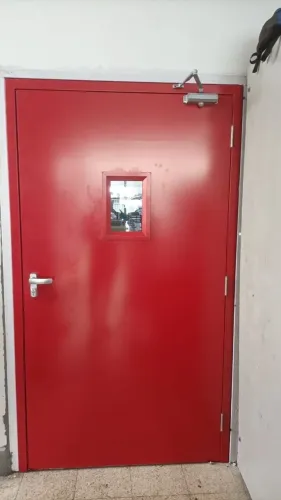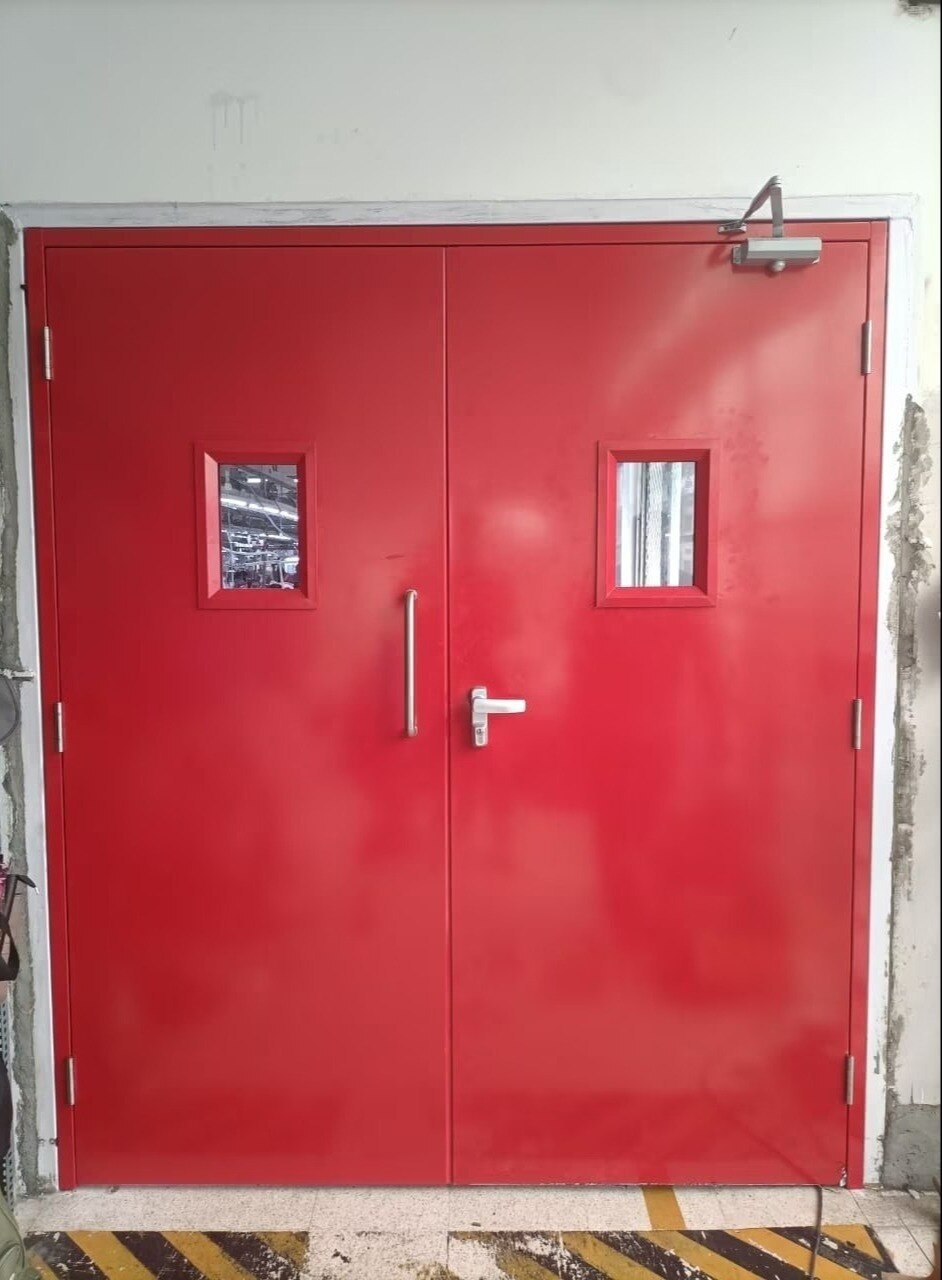
A door described as fire proof or fire rated is not automatically a CBRI-certified doorset, and a clean-room door that passes a fire test can still fail pressure, hygiene or leakage requirements. By the end, you will know which documents, construction details, test limits and site measurements to verify before approving a fire door for a Coimbatore clean-room project.
Key takeaways
- Match the CBRI report to the exact doorset, hardware and wall construction.
- Specify fire resistance for the complete tested doorset, not only the steel leaf.
- Check door seals, thresholds and hardware against pressure, hygiene and cleaning controls.
- Inspect labels, certificates, clearances and installation records before handover.
What CBRI certification must prove before you accept a fire door
A brochure claim proves only what the manufacturer has written. Accept CBRI certified fire doors only after matching documentary evidence to the exact doorset proposed for your clean room, not merely to a similar-looking fire proof doors model.
1. Request the CBRI test report or certificate showing its exact report number, certificate holder, test laboratory, fire-resistance classification and period, such as 30, 60, 90 or 120 minutes. Confirm that the stated performance covers both integrity and insulation, rather than an unexplained “fire rated” label.
2. Compare the tested configuration with the quotation. Check the door model, leaf thickness, height and width, frame, wall construction, hinges, closer, latch, glazing, vision panel, drop seals, intumescent seals and perimeter fire stopping. A certificate for a masonry opening does not automatically cover a lightweight partition, sandwich panel or modular clean-room wall.
3. Obtain the approved drawings, installation method, hardware schedule, maintenance instructions and the certificate’s validity or scope. Ask the supplier to identify any size limits, permitted hardware substitutions and conditions attached to the test. If the proposed configuration differs, demand written evidence that the change remains within the tested scope.
ISO 14644-1 classifies airborne particle cleanliness; it does not certify fire resistance, leakage, cleanability or pressure performance. A local supplier, polished brochure or “CBRI approved” phrase cannot replace product-specific test evidence.
Specify the fire rating as a tested doorset, not a steel door leaf
A 60- or 120-minute claim applies only to the tested doorset, not to a steel leaf removed from its frame. A fire rated metal door needs evidence for the complete assembly: leaf skins and thickness, core, frame, hinges, closer, latch, seals, glazing and fixings.
| Item | What must match the CBRI test record | What goes wrong if changed |
|---|---|---|
| Test basis | Exact CBRI report number, test standard, laboratory and fire-resistance classification | “Fire proof” wording does not establish a rating |
| Rating | The specified 60- or 120-minute period, including the performance criteria reported | A higher-looking label may not cover the required criterion |
| Door construction | Leaf profile, steel thickness, core, edge details, frame and intumescent seals | A different leaf or frame creates an untested assembly |
| Hardware and glazing | Hinges, closer, lock or latch, vision panel, glazing system and any access-control preparation | Retrofitted hardware or cut-outs can invalidate the tested configuration |
| Wall and fixing | Masonry, concrete, lightweight partition or modular cleanroom wall; anchors and perimeter fire stopping | A doorset tested in masonry cannot automatically be installed in a sandwich panel |
Request the CBRI report or certificate, certificate holder, approved drawings, tested dimensions, hardware schedule and installation method. Confirm that the proposed wall opening, frame anchorage and perimeter seal appear in those documents.
CBRI certified fire doors are acceptable only when the certificate scope covers your actual size and wall system. A mineral-wool core or double steel skin describes materials; it does not prove 60- or 120-minute performance.
Make fire performance work with clean-room pressure and hygiene controls
A fire rated metal door can still ruin a pressure cascade if its undercut leaks, gasket breaks, frame is misaligned or closer leaves the leaf ajar. Treat fire performance and room performance as separate acceptance tests; ISO 14644-1 classifies airborne particles, not fire resistance, leakage or cleanability.
- Specify a flush leaf, sealed joints, minimal ledges and no exposed frame pockets or projecting fasteners. These features reduce particle traps and make wipe-downs complete.
- Define continuous smoke and intumescent seals, frame gaps, a self-closing device, latch engagement, and a threshold or drop seal. State the pressure differential and the leakage or room-recovery test that the installed door must pass.
- Match every hinge, closer, lock, access-control component, vision panel and seal to the tested doorset. An untested cut-out or replacement closer can invalidate the fire result and prevent reliable closing.
- Check surface and gasket compatibility with the process chemicals. Name the actual agents—such as hydrogen peroxide vapour, chlorine-based disinfectant, alcohol, caustic cleaner or peracetic acid—and obtain written resistance data for the coating, stainless steel, gasket and sealant.
- Inspect the installed assembly: run a clean wipe across joints, verify undamaged seals and correct gaps, confirm automatic closing and latching, and examine fire-stopping around the frame.
Do not accept “fire proof doors” as a hygiene specification. A visually heavy leaf proves neither pressure control nor chemical resistance; a door that sheds particles or fails to close can compromise the room even when its fire test is valid.
Resolve hardware conflicts before the doorset is tested and installed
Make the hardware schedule part of the CBRI-tested doorset before fabrication; otherwise a compliant leaf can become an untested assembly. A fire rated metal door must close against the clean-room pressure differential, engage its latch and maintain gasket contact without creating ledges or contamination traps.
1. Select the tested closer, hinges, latch, coordinator and intumescent seals as one package. Do not replace the closer or add a coordinator after approval; extra projection, screw holes or frame alterations can invalidate the tested configuration.
2. Keep access control outside the clean room where possible. If a reader, electric strike or electromagnetic lock is necessary, obtain written confirmation that the exact device and fixing method are within the tested doorset scope. The internal handle must release the door without a card, key or powered system.
3. Make emergency egress independent of power and network status. A fire alarm or power failure must release the access-control function where the approved design requires it, while panic hardware must still latch the leaf when the door closes.
4. Specify flush faces, sealed penetrations and cleanable hardware. Avoid exposed fasteners, deep frame pockets and projecting devices that collect particles or resist disinfectants.
Before handover, test pressure-room operation with the access system active: open the door, release it, confirm full closure and verify latch engagement. Record failed closure, rebound or leakage; do not cure those faults by weakening the closer.
What to send a Coimbatore manufacturer and what to inspect on site
Send the quotation request as a doorset brief, not a request for a generic fire rated metal door. Whether you approach Rock Miller Doors or another fire rated door manufacturer in Coimbatore, include:
- Opening width and height, wall construction and thickness, required fire-resistance period, and the number of leaves.
- Clean-room pressure differential, expected traffic, required leakage or pressure test, threshold or drop-seal arrangement, and cleaning chemicals.
- Hardware schedule covering closer, latch, hinges, access control, emergency egress, glazing and any hold-open release connected to the fire-alarm system.
- Exact CBRI report or certificate number, certificate holder, tested model, dimensions, wall system, hardware, glazing, seals and validity or scope.
- Approved shop drawings, installation method, fire-stopping detail, maintenance instructions and evidence that your proposed size remains within the tested configuration.
On delivery, compare the nameplate and supplied documents with the approved quotation and CBRI evidence. A certificate for one configuration does not approve a modified door.
Inspect each opening: the frame must be plumb, gaps must match the approved detail, fire-stopping must be intact, and intumescent or smoke seals must be continuous and undamaged. Operate the door fully; it must swing freely, self-close, latch completely and leave no obstruction. Reject wedges and improvised magnetic catches.
Check flush faces, sealed joints, cleanable surfaces, gasket continuity and exposed fasteners, because a certified door can still undermine clean-room pressure control or create contamination traps.
Related products
 | Steel Doors Our clean room doors are extensively used in cleaning workshops, Hospitals, Pharma, Food factories, and so on. View product → |
 | Fire Door Fire prevention is our top priority for every building designer or architect. View product → |
Frequently asked questions
What must CBRI certification prove before you accept a clean-room fire door?
The CBRI evidence must identify the tested doorset, fire rating, construction, wall assembly, hardware and installation conditions. Match those details to the proposed door rather than accepting a brochure claim or similar-looking model.
Why specify a fire rating as a tested doorset instead of a steel door leaf?
Fire performance depends on the complete assembly: leaf, frame, glazing, seals, hinges, closer, lockset, wall construction and installation. A steel leaf alone does not prove that the installed doorset achieves its claimed rating.
How do fire doors work with clean-room pressure and hygiene controls?
Confirm that the closer, seals, threshold and frame maintain the required pressure boundary without creating cleaning traps. Review surface finish, flush hardware, gasket compatibility and clearances against the room’s sanitation procedures.
Which hardware conflicts must be resolved before testing and installation?
Settle the exact closer, hinges, lockset, panic hardware, access-control devices, vision panels, drop seals and hold-open arrangements before testing. Substituting unlisted hardware can invalidate the tested doorset configuration.
What should you send a Coimbatore manufacturer before ordering, and what should you inspect on site?
Send the opening sizes, wall type, fire rating, clean-room pressure, hygiene requirements, traffic pattern and hardware schedule. On site, inspect labels, certificates, frame anchoring, seals, gaps, operation, clearances and installation records.
Related products
 | Fire Door Fire Doors with Door Fittings View product → |
 | Stainless Steel Doors SS doors can withstand chemical washing and are designed to meet the most severe requirements for clean and sanitary applications. View product → |