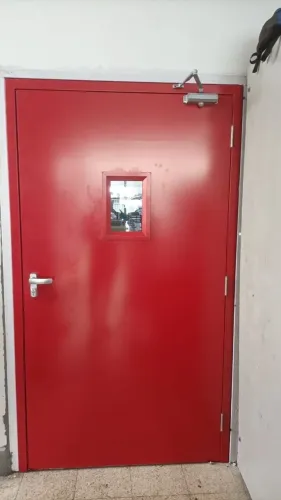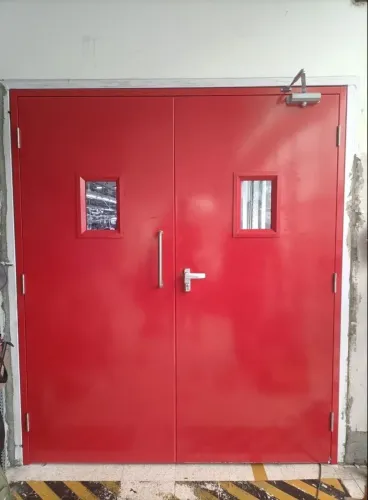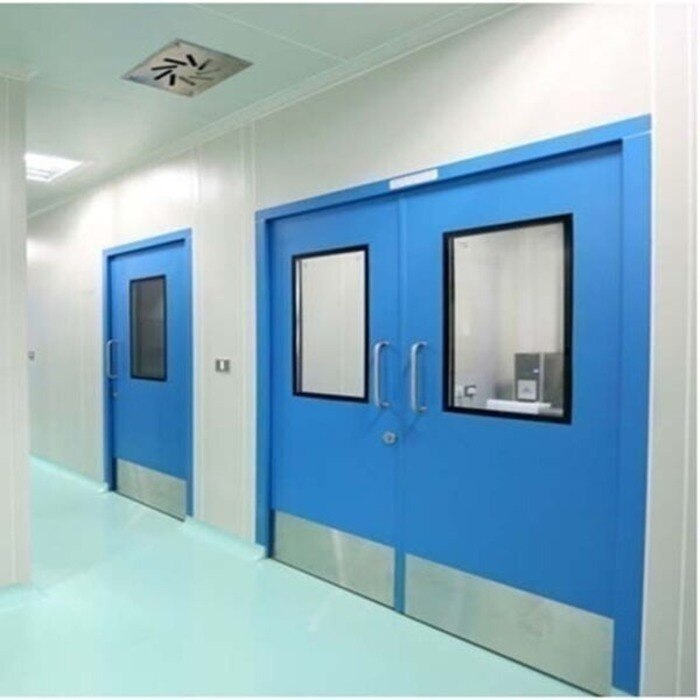
A glazed sliding door earns a fire-door rating only when the complete tested assembly—not just the glass—meets the required performance for its opening. By the end, you will be able to read the rating, compare sliding systems with hinged doors and shutters, test the escape and power-failure arrangements, and request evidence from a supplier in Coimbatore.
Key takeaways
- Verify the complete tested door assembly, not the glass alone.
- Match the rating to the wall, opening and required evacuation time.
- Check alarm, power-failure and manual-release behaviour before approval.
- Request test reports, installation limits and supplier traceability documents.
What proves that a glazed sliding door is a fire door?
A glazed sliding door is a fire door only when the complete, tested assembly—not its glass alone—achieves a stated rating. The assembly includes the door leaf, fire-rated glazing, frame, seals, guides, rollers, closing or locking hardware, and fixings to the supporting wall.
Request a third-party test report, certificate, or listing that identifies:
- The exact glazed sliding fire doors model and configuration tested
- The test standard, rating duration, integrity and insulation results
- The approved glass type, frame profile, seals, hardware and maximum dimensions
- The supporting wall construction and installation method covered by the test
A certificate for the glass does not certify the door. Replacing the glass, glazing bead, frame, rollers, seals, operator or wall fixings with an unlisted alternative can invalidate the assembly, even when the replacement glass carries the same nominal fire rating.
The listed glass size, aspect ratio and overall door dimensions are limits, not design suggestions.
Fire endurance also differs from smoke control. Fire rated glazed sliding doors may need a separate documented air-leakage or smoke-control performance; UL 1784 is the recognised test method for air leakage in door assemblies and other opening protectives. Ask whether that evidence covers the complete sliding door, not just a sample seal.
Finally, confirm that the tested closing, securing and release mechanisms remain part of the supplied configuration. Dirt in floor guides, disabled release devices or an obstructed travel path can stop a certified door from closing and performing as tested.
How should you read the fire rating and test evidence?
“90 minutes” applies only to the tested door assembly, installed in the approved wall and opening configuration. Match that duration to the wall or compartment barrier and the authority having jurisdiction; reject an unspecified “fire-rated” claim.
| Marking or claim | What it proves | What to check |
|---|---|---|
| E | Integrity: the door resists flames and hot gases for the stated minutes | Tested duration, such as 60, 90 or 120 minutes |
| I | Insulation: limits heat transfer to the non-fire side | Required where people, escape routes or sensitive equipment are nearby |
| W | Radiation control: limits heat radiated through the glazing | Maximum permitted distance from occupants or combustible materials |
| Smoke control or UL 1784 | Air-leakage performance, separate from fire endurance | Leakage limit, pressure, seals and tested door configuration |
Request the evidence file, not a brochure:
- Test report or certificate naming the glass, frame, rollers, seals, hardware and fixing method
- Indian standard used and acceptance from the authority having jurisdiction; European E/I/W or North American terms alone do not establish Indian compliance
- Maximum tested width, height, glass size, aspect ratio and assembly dimensions
- Installation instructions showing the approved wall, anchors, sill, joints and glazing beads
Changing the glass, bead, frame, rollers or wall fixing can void the result, even when replacement glass carries the same nominal rating. The “best fire doors in Coimbatore” are therefore the ones with evidence matching your opening, not the highest number printed in an advertisement.
When is a glazed sliding door better than another fire-door type?
A glazed sliding door is the stronger choice when you need a wide opening, visual supervision and automatic movement without a swinging leaf consuming corridor or production-floor space. It suits separation between industrial zones, healthcare areas and lift lobbies, but it is not automatically the best fire door for an escape route.
A search for best fire doors glazed sliding doors in coimbatore should end with an application comparison, not a supplier ranking.
| Option | Visibility and flow | Space, smoke, egress and maintenance |
|---|---|---|
| Hinged fire door | Limited visibility; one-way pedestrian flow through the leaf | Simple hardware and strong egress suitability; confirm smoke-control performance; needs swing clearance |
| Fire-rated shutter | No visibility; rapid closure protects a service or vehicle opening | Compact overhead or side storage; poor pedestrian flow; inspect guides, curtain and release system |
| Solid steel sliding door | No visibility; handles wide industrial openings | Saves swing space and resists impact; verify smoke leakage and egress approval; rollers and seals need servicing |
| Glazed sliding fire door | Preserves sightlines and supports two-way movement through a wide opening | No swing arc; request documented smoke leakage or UL 1784 performance; automatic hardware and glass seals increase maintenance |
| Non-rated glazed slider | Excellent visibility and easy flow | Not a compartment barrier; glass, frame and operator lack fire evidence, so it cannot replace a tested fire assembly |
Choose the glazed option only when its tested dimensions, glass, frame, seals, hardware and installation match the opening. For egress, check the adopted code’s rules on horizontal sliding doors, occupant load and manual emergency operation.
Can the door still protect people during an alarm or power failure?
A glazed sliding fire door protects people only if it closes, latches, and leaves a usable escape path when power or the fire alarm fails. Confirm the project’s adopted life-safety code permits a horizontal sliding door on that route; occupancy, occupant load, travel direction, and manual egress rules can disqualify it.
Check the operating sequence with the installer:
- Fire-alarm activation must release any hold-open device and command the door to close, not merely sound an alarm. Test closure with the alarm panel and with normal power disconnected.
- A battery backup must support the specified automatic and manual functions for the documented duration. It must not keep the door held open after a fire signal.
- Push-to-open, breakaway, or other emergency override must let occupants escape without a key, code, card, or staff intervention.
- Access control must unlock the escape side during alarm and power loss. A locked reader or failed magnetic lock can turn a rated opening into a trap.
- Obstruction sensing must stop or reverse the moving leaf without preventing final fire closure. Test a person-safe obstruction and confirm the door still secures afterward.
- Manual operation must remain possible if the operator, sensor, or battery fails. Dirt in floor guides, misaligned rollers, and stored goods in the travel path can stop glazed sliding fire doors from closing.
- Keep the full escape width clear, including the pocket, guide rail, and approach zone. A door that closes safely but blocks the required exit width still fails the evacuation test.
Record each test and repeat it during scheduled fire-door inspections, not only at handover.
How do you match the door to the opening and verify the supplier?
Match the door to the opening’s required rating and use, not to its appearance. A compartment boundary needs a tested assembly rated for the wall or barrier—such as 60, 90 or 120 minutes—while a corridor or lift lobby needs documented smoke performance when occupants depend on that separation.
1. Identify the opening before requesting prices. Record the wall construction and rating, clear width and height, traffic direction, threshold, nearby equipment and whether the opening serves a service route, warehouse zone, healthcare area or public corridor.
For an escape route, obtain written approval against the adopted life-safety code; a rated horizontal slider is not automatically an acceptable exit door.
2. Define the performance. Request the complete tested configuration: door leaves, approved fire-rated glass, frame profile, seals, guides, rollers, locking or closing hardware, operator and wall fixing. Ask for the certificate or listing showing the exact minutes and classification.
If smoke containment matters, request air-leakage evidence, such as testing to UL 1784, separately from fire endurance.
3. Reject substitutions without written listing approval. A different glass, seal, roller, frame or operator can invalidate the assembly even when the replacement part appears equivalent.
4. Evaluate the supplier’s delivery, not its catalogue. A Coimbatore buyer comparing a glazed door manufacturer in Coimbatore or the claimed best fire doors in Coimbatore should request references, installation records, commissioning results, alarm-interface testing, maintenance intervals, spare-parts support and local code-submission documents.
Rock Miller Doors belongs in that comparison only after it supplies this complete evidence package.
Related products
 | Glazed Doors Depending on the level of protection needed, we may offer a wide range of glass and glazing solutions. View product → |
 | Fire Door Fire prevention is our top priority for every building designer or architect. View product → |
Frequently asked questions
What proves that a glazed sliding door is a fire door?
A complete tested assembly must achieve a stated fire rating. Check the leaf, fire-rated glazing, frame, seals, guides, rollers, hardware and fixings together.
How should you read the fire rating and test evidence?
Confirm the rating, test standard, tested configuration, supporting wall, glazing type, hardware and permitted installation limits in the test report.
When is a glazed sliding door better than another fire-door type?
It suits openings that need clear visibility, controlled access and space-efficient movement, provided the tested rating and operating conditions match the application.
Can the door still protect people during an alarm or power failure?
Verify that the system closes or locks as designed during an alarm and has a defined manual-release or fail-safe function during power loss.
How do you match the door to the opening and verify the supplier?
Compare the opening size, wall construction, traffic, escape route and environmental conditions with the tested limits, then request traceable test and installation documents.
Related product
 | Fire Door Fire Exit Doors / Emergency Exit Door Rock Miller Doors are designed to protect lives in the event of a fire-related disaster for up to two hours. View product → |