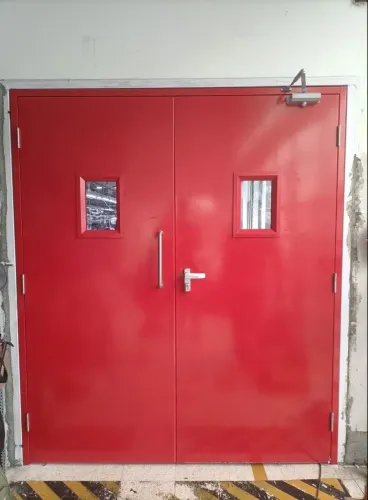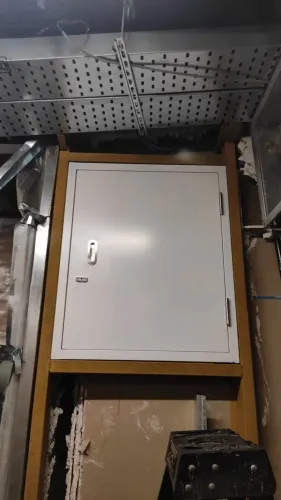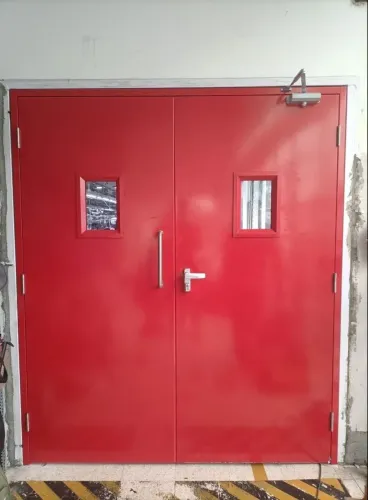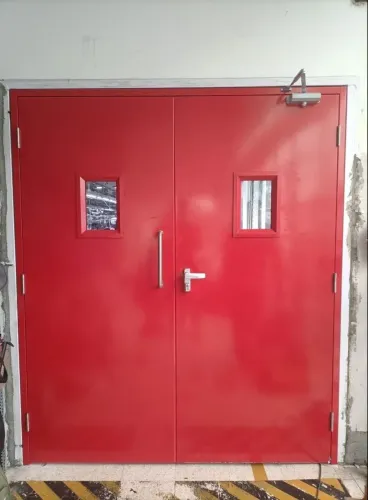
A fire-rated door is not automatically a safe emergency exit: the wall, frame, hardware, seals, swing and installation all determine whether the opening performs during a fire. By the end, you will have a practical way to match a door assembly to your industrial hazard, verify its evidence and compare suppliers on safety, service and lifecycle performance.
Key takeaways
- Match the complete door assembly to the fire and process hazard.
- Request test evidence for the leaf, frame, hardware, seals and glazing together.
- Check the wall construction and fire rating before approving the door.
- Test panic hardware, self-closing action and final commissioning on site.
Match the Door Assembly to the Industrial Hazard
A fire door is suitable only when its complete assembly matches the hazard, wall and escape plan. Specify the tested leaf, frame, hinges, closer, latch, seals, glazing and threshold together; a steel leaf with an impressive rating is not enough.
Choose an integrity-and-insulation classification where heat transfer threatens people or adjacent equipment, rather than treating an integrity-only rating as equivalent.
| Hazard | Suitable emergency-exit specification | Critical check |
|---|---|---|
| Warehouse | Robust steel doorset with self-closing, latching hardware and the wall’s required fire rating | Resist forklift damage; keep the approach and threshold clear |
| Production line | Rated doorset with protected vision panels only where the glazing is included in the test; use durable hinges and closer | Do not drill or add access devices outside the tested configuration |
| Boiler room | Heat-resistant rated assembly with intumescent seals and outward egress swing where approved | Match the boiler-room wall and protect nearby penetrations |
| Electrical room | Rated steel assembly with smoke seals where required and sealed cable penetrations | Do not add untested grilles or rely on the door for ventilation |
| Chemical area | Corrosion-compatible finish, sealed edges and hardware suited to the substance and escape plan | Confirm chemical compatibility; fire rating does not provide explosion protection |
| Cold store | Low-temperature seals, closer and latch specified for the operating temperature | Prevent icing, condensation and a frozen closer |
| High-occupancy facility | Outward-opening exit door with panic or emergency-exit hardware and required clear width | Release must work without a key, tool or special knowledge |
For the best fire doors, require the assembly test report, permitted dimensions and hardware list before approval. Check the emergency-exit layout against the National Building Code of India, 2016, and local fire-authority approval. A fire-rated door still fails its purpose if stock, machinery or access control blocks evacuation.
Ask for the Tested Assembly, Not a Leaf-Level Fire Claim
A two-hour claim on a steel leaf does not prove that the installed emergency-exit doorset will resist fire for two hours. Ask for evidence covering the leaf, frame, hinges, closer, latching hardware, glazing and intumescent or smoke seals as one tested construction under EN 1634-1.
Request these items before approving the door:
- The complete fire-test report, including report number, laboratory, rating duration, tested dimensions and construction
- A drawing identifying the exact leaf, frame, hinges, closer, latch, glazing, seals and threshold
- The permitted variations for hardware, glass, frame profile, wall interface and door size
- Installation instructions stating fixing points, gaps, tolerances, packing materials and fire-stopping details
- A traceable label or certificate matching the supplied doorset to the tested configuration
- Commissioning records confirming alignment, closing force, latch engagement and seal condition
Smoke control is a separate claim. If the door protects a smoke compartment or escape route, require the smoke-seal type, leakage limit and applicable smoke test method; “fireproof” alone says nothing about smoke leakage.
Do not let a site team substitute stainless-steel hardware, thicker glass, a different closer or a new seal without checking the test report’s permitted variations. Monsoon moisture, wash-down chemicals, dust and forklift impact can damage an otherwise compliant assembly.
A best fire door supplier will also provide inspection and adjustment support, including the annual fire-door inspection required by NFPA 80 where that standard governs the project.
Verify Indian Code, Test Evidence and Wall Compatibility
Approval requires evidence for the complete doorset, not a “two-hour” claim attached to a steel leaf. Check National Building Code of India, 2016 Part 4, the applicable IS 3614 fire-check door test classification, and coordination with the sanctioned drawings and Telangana fire-service approval.
Ask the emergency exit doors manufacturer for:
- A fire-test report naming the leaf, frame, hinges, closer, latch, glazing and seals, with report number, test laboratory and tested rating duration.
- A traceable product label or certificate matching the supplied model, dimensions and hardware.
- Shop drawings showing door schedule, opening size, frame profile, swing, threshold, wall interface and permitted glazing.
- Installation instructions stating fixing method, tolerances, seals, anchors and fire-stopping around the frame.
- Smoke-control evidence where the project specification or authority requires smoke leakage performance.
- Commissioning records confirming closer action, latching, seals and final configuration.
| Document | Check | Reject or clarify when |
|---|---|---|
| Assembly test report | Exact doorset and hardware match | It covers only the leaf, frame or shutter |
| Wall drawings | Wall type, thickness and fire rating match the tested installation | The frame is fitted into an untested partition |
| Site survey | Opening, floor level, threshold, escape route and surrounding services | Cables, ducts or finishes prevent proper fixing or sealing |
Have the architect and fire consultant sign off the interface before fabrication. A local supplier can shorten remedial visits, but proximity never substitutes for traceable test evidence.
Make the Exit Open Quickly and Close Reliably
A fire-rated leaf can still trap people if its swing, threshold or lock resists evacuation. Set the swing in the direction of egress where the occupant load, occupancy classification or approved National Building Code and local fire-authority layout requires it. Protect the full clear opening shown on the drawing, including the approach space.
Specify these exit-use conditions:
- Use panic hardware or emergency-exit hardware when the approved life-safety design requires it; an ordinary fire-door latch is not automatically suitable for escape.
- Release access-controlled locks from the egress side without a key, tool or special knowledge. Confirm operation during fire alarm activation and power failure.
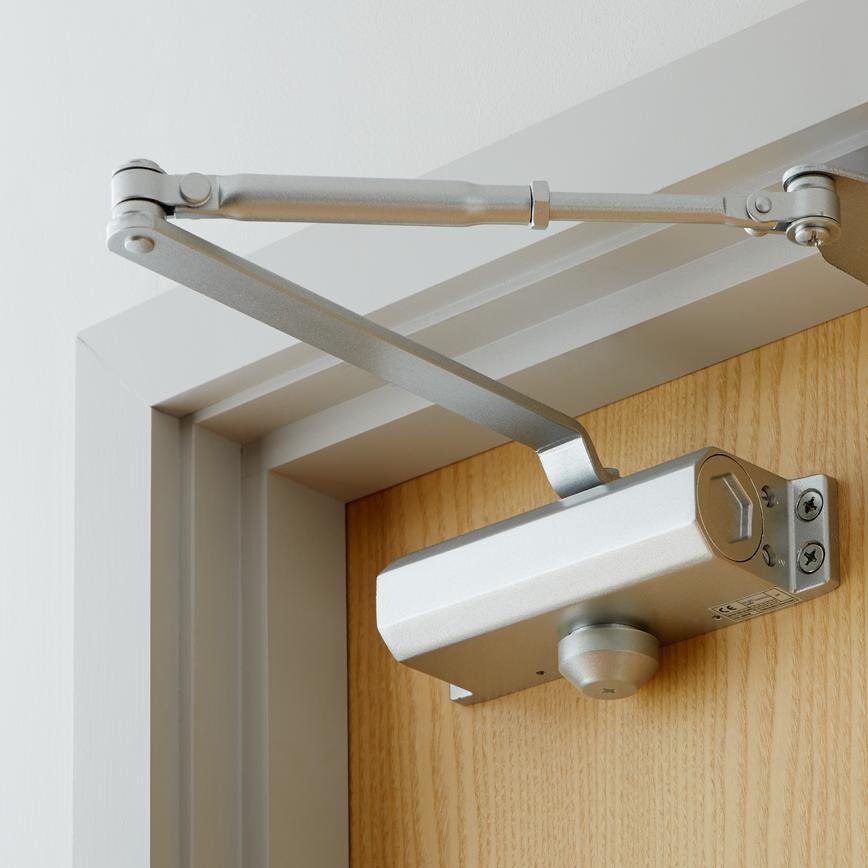
- Fit a tested self-closing device that shuts the leaf from its fully open position and engages the latch. Specify high-cycle hardware when workers use the opening throughout each shift.
- Use a listed hold-open or release device, connected to the fire-alarm system, instead of a wedge or tie. The door must close on alarm or power loss as the approved design requires.
- Keep the threshold, floor, landing and approach free of pallets, cables, process equipment and stored goods; provide visible exit signs and emergency lighting.
Ask an emergency exit doors manufacturer to demonstrate the installed door opening, release sequence and closing time, not merely the fire rating. The best fire doors remain useful only when staff do not prop them open and the closer, latch, alarm release and clearances receive documented checks at least annually.
Compare Suppliers on Installation, Commissioning and Ongoing Support
The best fire door supplier for industrial emergency exits in Hyderabad remains accountable after delivery: the team measures openings, installs the frame plumb, sets clearances, checks the closer and verifies that the latch engages without force. Poor installation can leave a certified assembly unable to close or protect the escape route.
Compare suppliers against the work they document:
| Stage | Strong supplier evidence | Warning sign |
|---|---|---|
| Installation | Approved drawings, wall-interface details, trained installers and recorded tolerances | Leaf fitted without checking wall, threshold or frame |
| Commissioning | Door-by-door checklist covering swing, clear opening, closer, latch, seals, access-control release and emergency operation | “Installed” marked complete without functional tests |
| Handover | Assembly test report, traceable label or certificate, as-built door schedule and maintenance instructions | Leaf-level fire claim with no exact configuration evidence |
| Aftercare | Annual inspection, adjustment, spare seals and hardware, defined response time and defect records | Support ends when the purchase order is closed |
Require coordination with National Building Code of India, 2016 Part 4, the sanctioned fire-safety documents and Telangana fire-service approval. NFPA 80 calls for fire-door inspection at least annually; correct blocked doors, damaged labels, failed closers, excessive gaps and defective latches rather than recording them and walking away.
Ask Rock Miller Doors, or any shortlisted supplier, to price commissioning and recurring inspection separately. The best fire door supplier makes these costs visible, preserves assembly evidence and reduces shutdowns caused by avoidable door failures. A local team can shorten response time, but proximity never substitutes for test documentation.
Related products
 | Fire Door Fire Exit Doors / Emergency Exit Door Rock Miller Doors are designed to protect lives in the event of a fire-related disaster for up to two hours. View product → |
 | Fire Door Fire prevention is our top priority for every building designer or architect. View product → |
Frequently asked questions
How do you match a fire door to an industrial hazard?
Assess the fire, smoke, heat, chemicals, traffic and escape route, then specify an assembly designed for those conditions.
Why is a leaf-level fire rating insufficient?
The leaf works as part of a tested assembly with its frame, hinges, closer, latch, seals, glazing and threshold.
What should you verify before ordering an industrial fire door?
Check the test evidence, Indian code requirements, wall construction and compatibility between the door assembly and the supporting wall.
What makes an emergency exit door reliable?
It must open quickly from the escape side, release through suitable exit hardware, close fully and receive documented installation and commissioning checks.
Related products
 | Fire Door Fire rated Shaft Doors / Fire Shaft Door RM Shaft Doors are an excellent example of our organization's Premum-quality results. View product → |
 | Fire Door Fire Doors with Door Fittings View product → |
 | Door Fittings A push bar, also known as a crosh bar or panic device, is used to swiftly unlock a door during an emergency. View product → |