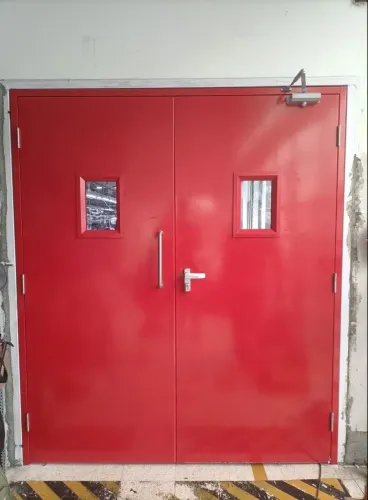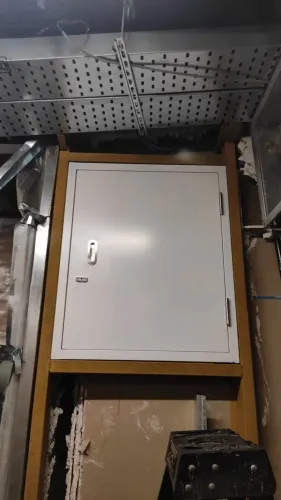
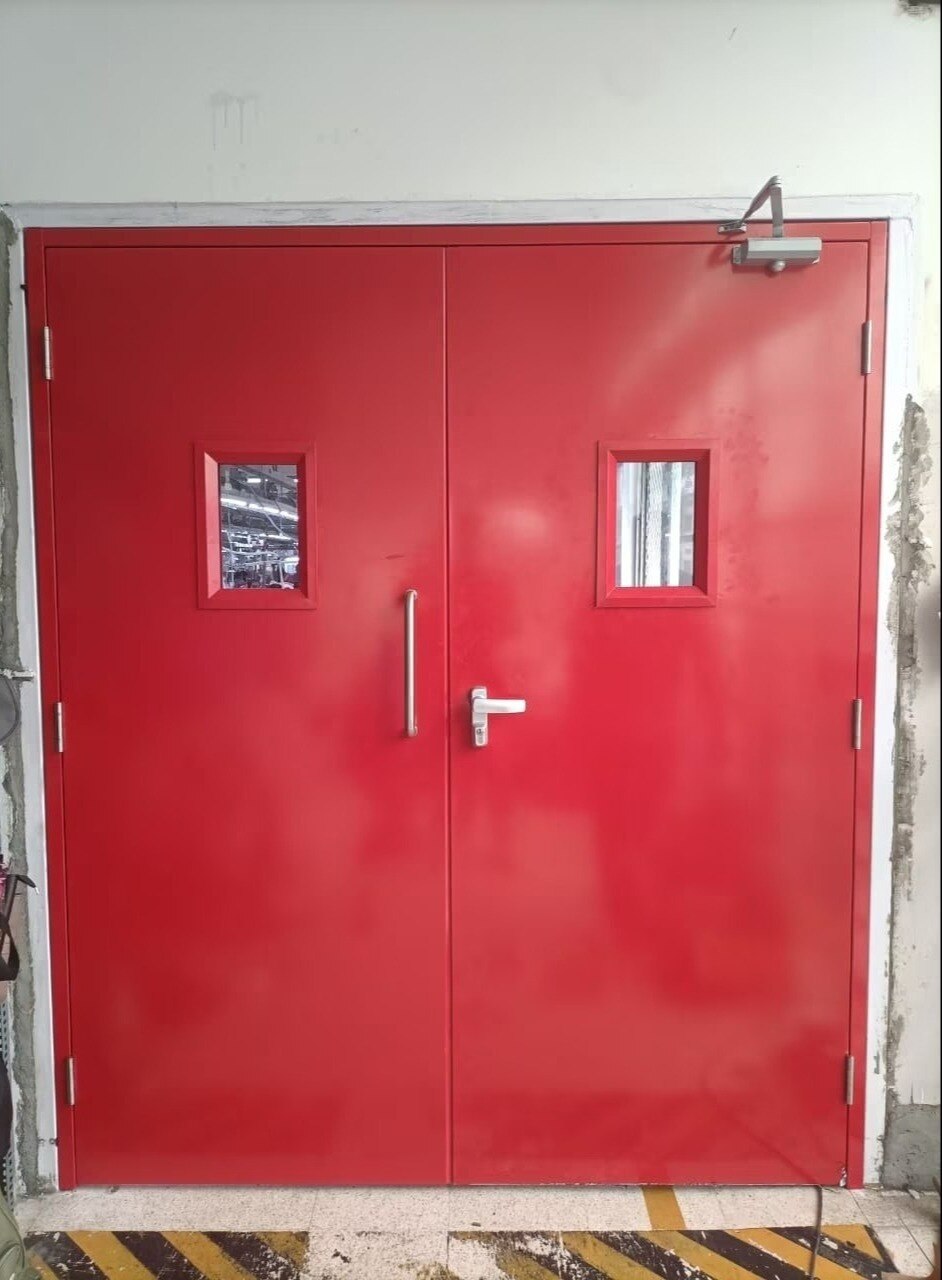
A high-risk facility does not become safer because a door leaf is labelled “120-minute fireproof.” By the end, you will be able to compare suppliers, verify a complete tested door-set, choose a rating for each hazard area and reject installations that cannot be defended during approval or inspection.
Key takeaways
- Match the door rating to the compartment, occupancy, fuel load and wall rating.
- Request the complete tested door-set report, not only a door-leaf certificate.
- Give suppliers opening sizes, traffic frequency, hardware and environmental conditions before pricing.
- Confirm installation records, inspection access and replacement hardware after handover.
Start with the hazard, not the door appearance
Choose the rating from the fire compartment, occupancy and fuel load—not from the door’s finish. A search for the best fire doors in Hyderabad should begin with the fire strategy, NBC 2016 requirements and the rating of the wall or partition being protected.
“Fireproof door” is imprecise: fire doors are rated assemblies for periods such as 30, 60, 90 or 120 minutes.
| Area or hazard | Rating decision | Check before specifying |
|---|---|---|
| Protected corridor or stair | Match the required compartment and escape-route rating | Confirm wall rating and smoke-control requirement |
| Electrical room, kitchen or plant room | Increase the rating where the fuel load or equipment risk is higher | Confirm fire load, ventilation and service penetrations |
| Chemical store, generator room or process area | Use the fire strategy’s specified rating; do not guess from room size | Add separate evidence for blast, pressure, chemical or gas-tight performance |
A fire-resistance rating does not automatically provide smoke control, blast resistance or pressure resistance. Request a tested doorset, not an uncertified leaf: the evidence must cover the leaf, frame, hinges, latch, closer, intumescent seals, glazing, threshold and wall interface. A 60-minute leaf with the wrong frame or excessive perimeter gaps is not a 60-minute installation.
Verify the tested wall construction, permitted size, integrity and insulation classification before accepting the specification.
Demand evidence for the complete tested door-set
A certificate on a brochure does not prove that the quoted door will perform. Before accepting a quotation, require evidence for the complete tested door-set: leaf, frame, hinges, latch or lock, closer, intumescent seals, glazing, threshold and wall interface.
1. The complete fire-resistance test report and certificate number, traceable to the manufacturer or listing. Check the classification, such as 30, 60, 90 or 120 minutes, and whether it covers integrity, insulation or both.
2. The tested configuration: maximum door size, leaf and frame construction, frame profile, wall construction, glazing limits, threshold detail and every approved hardware item. A generic company certificate or door-leaf certificate is insufficient.
3. An approved hardware and glazing schedule naming the hinges, lock, closer, seals, vision panel and glass. Substituting a locally available closer or adding an unlisted louver can invalidate the tested assembly.
4. The proposed door schedule, with each opening’s location, rating, size, handing, wall type, serial or batch identification and installation configuration. Request the same schedule after installation as an as-built record.
5. The installer’s method statement, installation records and commissioning checklist, including frame fixing, clearances, self-closing, latch engagement and seal continuity. Ask for the maintenance procedure, inspection frequency and spare-parts arrangements.
For high-risk areas, request separate evidence for blast, pressure, chemical, gas-tight or security performance. Fire resistance alone does not establish those properties. Reject quotations that cannot connect each promised door-set to a specific report and approved installation detail.
Specify the opening and the operating conditions before pricing
A quotation matches the real opening only when you give the measured opening, wall construction and operating duty—not merely “a 90-minute fire door.” Give a fire proof doors supplier in Hyderabad the structural opening width and height, finished floor level, wall thickness, required fire-resistance period, single or double leaf, swing direction and clear opening needed for people or equipment.
Provide these technical details:
- State whether the wall is masonry, concrete, drywall or a fire-rated partition, and identify the wall’s tested rating.
- For double doors, specify meeting-stile clearance, astragals or intumescent seals, leaf-closing sequence and whether a coordinator is required.
- List hinges, closer, lock or latch, panic device, electromagnetic hold-open, vision panel, glazing, threshold and smoke seals.
- Describe exposure: indoor or outdoor location, humidity, washdown, dust, corrosive chemicals, temperature, traffic frequency and trolley or pallet impact.
- Give access-control requirements, power supply, fail-safe or fail-secure operation and any accessibility or escape-route constraint.
| Detail | Why it changes the quotation |
|---|---|
| Opening size and wall interface | Determines frame profile, fixing method and installation labour |
| Hardware and access control | Requires components approved for the tested door-set |
| Traffic and environment | Influences closer duty, protective finishes and service frequency |
| Double-leaf arrangement | Requires coordinated closing and an approved pair configuration |
Ask the supplier to price the complete tested assembly, not an isolated leaf. Insist that the proposed leaf, frame, hardware, glazing and installation configuration match the test evidence.
Compare Hyderabad suppliers on installation and site support
A 60-minute door can fail its purpose if the frame is poorly anchored, the wall is unsuitable or the leaf does not latch. Compare suppliers on installation control and post-installation response, not on the rating printed on the leaf.
| Check | Strong evidence | Warning sign |
|---|---|---|
| Installation | Named installers, completed project records, approved perimeter packing and clearance checks | Factory delivery with no site method |
| Traceability | Serial or batch numbers linked to the test report and door schedule | Identical certificates with no door-level identification |
| Configuration | Hardware schedule covering hinges, closer, latch, seals, glazing and wall type | “Equivalent” components offered without approval |
| Handover | As-built schedule, commissioning record and photographs | Certificate supplied without installation records |
| After-sales | Local response process, spare closers and seals, inspection intervals | No named service contact or replacement plan |
Ask each bidder to show one redacted Hyderabad installation file, including the certificate number, tested size, classification for integrity and insulation, wall construction, approved hardware and commissioning checks. Confirm that every door closes fully and positively latches without manual assistance.
The best fire door supplier in Hyderabad will also explain how it handles defects: excessive gaps, failed closers, damaged intumescent seals and doors wedged open. Whether you assess Rock Miller Doors or another supplier, require an approved automatic hold-open release where operationally necessary, connected to the building’s fire-detection strategy—not a loose wedge or disabled closer.
Protect the rating after handover
At handover, inspect each installed door-set against the approved schedule and traceable test report, not just the door leaf. Record enough information to reproduce the tested configuration; a substituted component can void the rating.
- Assign an opening ID and record the fire-resistance rating, wall construction, frame type, glazing limit and serial or batch number.
- Confirm that hinges, latch or lock, closer, seals, threshold and any hold-open release match the approved hardware schedule.
- Check that the door closes fully, latches without assistance and maintains the specified clearances.
- Examine the frame, leaf, glazing and seals for damage, gaps, missing sections or unauthorized drilling.
- Verify smoke-control doors have the specified perimeter or drop seals, with EN 1634-3 evidence where the design requires it.
- Give facilities staff the as-built door schedule, test report, certificate number, commissioning record and maintenance contact.
Set inspection frequency according to traffic, damage history and fire risk, with a documented annual inspection where NFPA 80 applies. Check the complete assembly and record every defect, repair and replacement. Use listed or approved parts only; a closer, seal or vision panel fitted from an untested alternative can invalidate the tested door-set.
Never defeat the closing or latching function, and investigate repeat failures instead of repeatedly resetting them.
Frequently asked questions
How do you choose a fire-door rating for a high-risk facility?
Start with the fire strategy, occupancy, fuel load and fire-compartment design. Check the wall or partition rating and NBC 2016 requirements before selecting the door rating.
What evidence should a certified fire-doors supplier provide?
Request test evidence for the complete door-set, including the leaf, frame, hinges, closer, latch, seals, vision panel and other fitted hardware. A certificate covering only the door leaf does not prove the installed assembly’s performance.
What information should you give suppliers before requesting a fire-door price?
Provide the clear opening size, wall construction and thickness, required rating, traffic frequency, closing cycle, hardware, exposure to heat or moisture and access-control requirements.
How should you compare fire-proof doors suppliers in Hyderabad?
Compare site measurement, installation supervision, fixing methods, commissioning records, response time, spare hardware availability and support for inspections—not only the quoted door price.
How do you protect a fire door’s rating after handover?
Keep the door self-closing and unobstructed, inspect seals and hardware, record damage and modifications, and replace components with compatible tested items. Do not drill, trim or alter the assembly without approval.