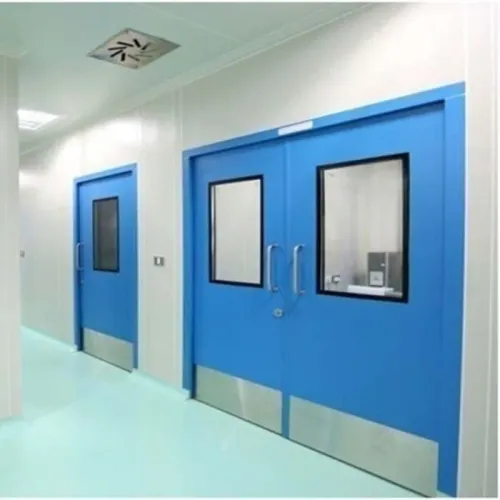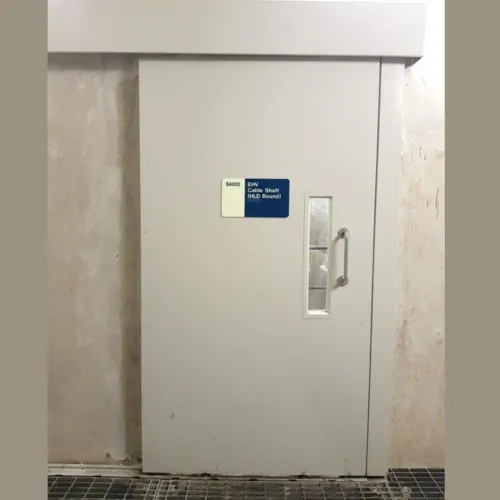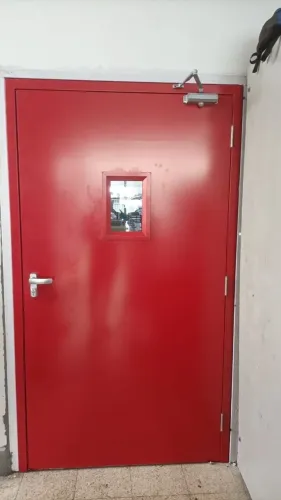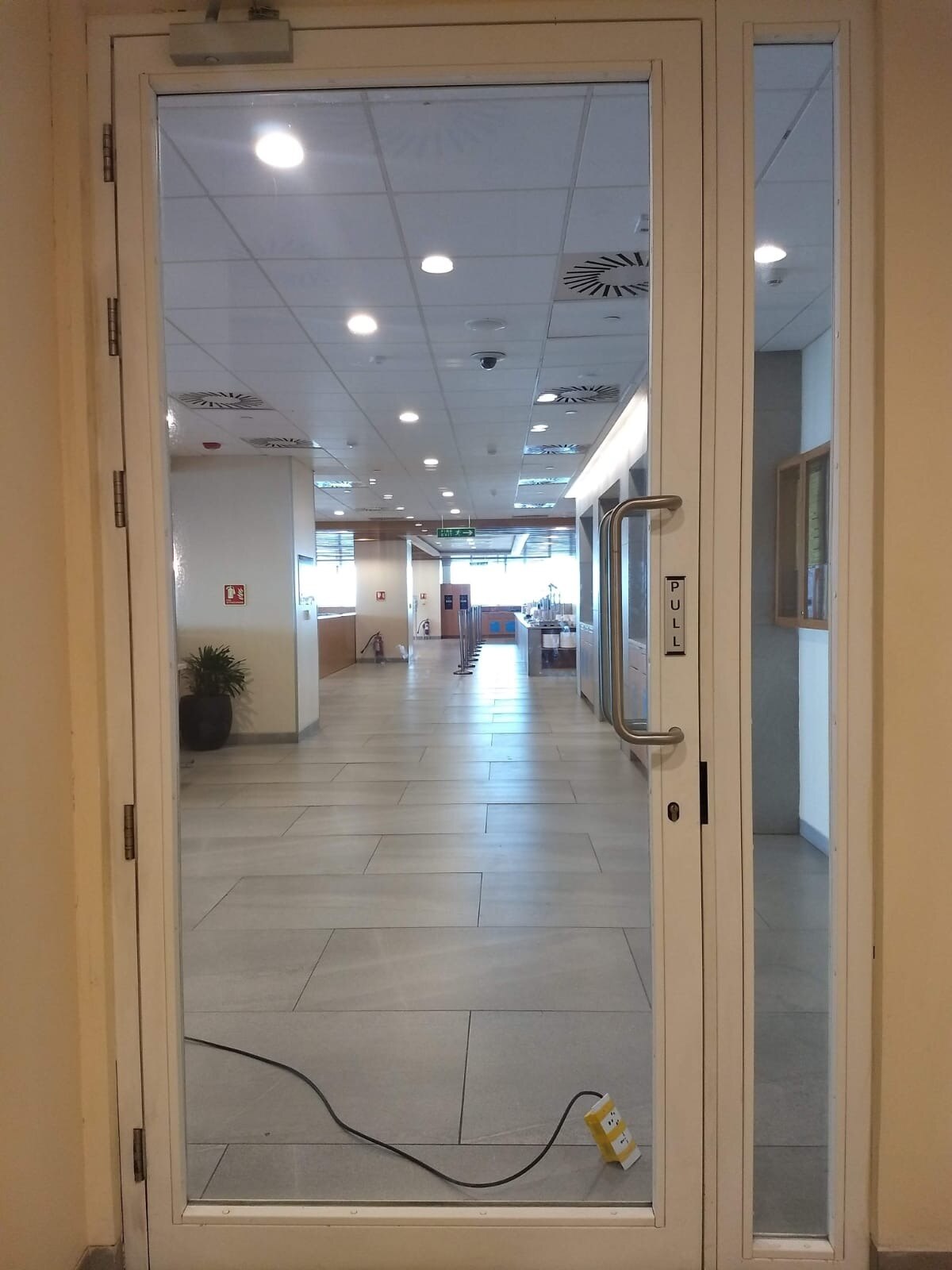
A hospital door closer must match the leaf, frame, seals, air pressure, fire rating and daily traffic—not just the door’s appearance. By the end, you can survey the opening, choose a mounting and power configuration, install and adjust the closer, and prepare a commissioning brief that covers fire safety, accessibility and maintenance.
Key takeaways
- Measure leaf size, mass, fire rating and traffic before selecting a closer.
- Match regular-arm, parallel-arm or top-jamb mounting to the frame and clearance.
- Adjust closing speed, latching, backcheck and fire-door release separately.
- Specify the complete door set, including closer, arm, frame hardware and controls.
Survey the hospital door before choosing a closer
A closer cannot be selected from “hospital door” alone. Before choosing a hospital door closer, measure the leaf width, height, thickness and mass; record its fire rating, opening angle, traffic frequency and required hold-open or alarm-release function. Note the pull and push sides, handing, frame depth, headroom, wall protection, vision panels and clearances.
On a fire door, verify that the closer, fixings, frame, seals and leaf belong to the tested or approved assembly; extra holes or unapproved hardware can invalidate the rating.
- Inspect hinge wear, door sag, frame alignment, floor slope and threshold height.
- Identify smoke seals, drop seals, latch seals and their closing resistance.
- Record pressure differences at isolation-room doors and drafts from air-conditioning.
- Note whether the area is clean, wet, isolation, high-traffic or psychiatric.
- Ask whether accessibility limits opening force and whether security demands delayed action or controlled release.
- Give the supplier the required mounting side and available fixing surface.
| Finding | Why it changes the specification |
|---|---|
| Heavy seals or pressure | Higher EN 1154 power size, but correct friction and alignment first |
| Fire-rated assembly | Use only approved compatible closer and fixings |
| Wide, heavy or frequently used leaf | Check width, mass and duty rather than copying an office-door size |
| Accessibility target | Test opening force and closing time; excessive spring power creates an unsafe barrier |
| Open hold function | Confirm whether mechanical hold-open or alarm-released hold-open is permitted |
Choose regular-arm, parallel-arm or top-jamb mounting
The opening direction and available mounting surface decide the configuration: confirm whether the closer will sit on the pull side, push side or frame before starting door closer installation.
| Option | What it means | When it applies |
|---|---|---|
| Regular-arm | Closer body mounts on the pull side of the door; the arm and shoe sit on the frame | Use when the pull-side frame has enough depth and the projecting arm will not strike a wall, vision panel or corridor traffic |
| Parallel-arm | Closer body mounts on the push side; the arm folds parallel to the door when closed | Use for push-side mounting, reduced projection and better protection from tampering; check that the frame can accept the parallel-arm shoe |
| Top-jamb | Closer body mounts on the header or top jamb; the arm connects to the door | Use when the door face cannot carry the body or the pull-side frame is unsuitable; verify header depth, ceiling clearance and door-rail width |
A regular-arm unit is unsuitable if its arm reduces the clear opening or hits wall protection. A parallel-arm unit needs adequate frame material for its shoe and reinforcement where the frame is hollow or thin.
Check handing from the approach side, then confirm the actual opening angle and closer template. A narrow head, overhead service, smoke seal or adjacent leaf can rule out a configuration that appears to fit on paper.
On a fire-rated assembly, match the mounting arrangement, fasteners and closer model to the tested door, frame and hardware approval. Extra holes or unapproved brackets can invalidate the rating.
Install the closer body, arm and frame hardware correctly
Use the closer’s supplied template for the door handing and selected mounting arrangement; do not copy hole positions from another closer. Incorrect geometry changes the arm angle and can leave the door unable to latch.
- Close the door, confirm the hinge side and opening direction, and hold the template against the leaf and frame on the specified mounting face. Check that the body will clear the vision panel, wall protection and nearby hardware.
- Mark every body, arm-shoe and frame-hole position through the template. Recheck measurements before drilling; a misplaced hole cannot be corrected by adjusting the valve.
- Drill pilot holes to the template diameter. Tap the frame or install the approved threaded inserts where specified. On a fire-rated door, use only the fasteners and fixing pattern allowed by the tested door assembly; generic self-tapping screws can void its rating.
- Fasten the closer body squarely to the leaf, with all fixing points engaged and tightened evenly. A loose body twists under load and produces uneven closing.
- Fit the arm to the pinion at the manufacturer’s specified pre-load angle, then secure the arm bolt and nut. Do not bend the arm to make it reach.
- Attach the shoe or track to the frame using the approved screws, then tighten the arm-to-shoe connection. Confirm the arm clears the frame and seals throughout the swing.
Open the door through its full intended angle and release it several times. Check for binding, frame contact, loose fixings and reliable latch engagement before adjustment and commissioning.
Set closing speed, latching, backcheck and fire-door performance
Adjust a hospital door closer in small increments, then test it repeatedly from the normal operating angle. The leaf must close smoothly, engage the latch without slamming and remain usable by people with limited strength. Excessive spring power can solve a latching problem by creating an inaccessible opening force.
- Set backcheck to cushion the opening before the door strikes a wall, but do not use it to restrict the required opening angle.
- Set closing speed so the door moves steadily from 90 degrees to 12 degrees; the 2010 ADA Standards specify at least five seconds for many interior non-fire doors.
- Set the latch valve only enough to overcome smoke seals, drop seals, latch seals, pressure differences and drafts.
- Release the door repeatedly from its normal operating angle and several partial openings. Confirm that the latch engages every time without a bang.
- Check the arm, shoe and frame fixings for movement, then make the final latch and closing adjustment after the door has been tested under seal pressure.
A fire-rated leaf needs positive self-closing and positive latching. Confirm that an approved hold-open device releases on the fire-alarm signal; never wedge the leaf open. Apply the force limit approved for the project authority rather than blindly using an office-door setting.
Record failed latching, damaged seals, loose screws or a disabled closer, and retest after correction.
Specify the complete door set and compare closer alternatives
Give the supplier a complete door-set brief, not only a closer model. For a hospital doors manufacturer door for closer installation in Chennai, specify the leaf width and weight, clear opening, opening direction, frame material and depth, fire and smoke rating, mounting side, headroom, seals, threshold, hinges, access-control hardware, alarm interface and required hold-open behaviour.
Add the operating-force target, maintenance access, and exposure: conditioned interior, wet service area or coastal/semi-exposed location.
- Require the quotation to name the mounting arrangement: regular-arm, parallel-arm, top-jamb, concealed or slide-track.
- State the closer power size, maximum tested door width and mass, finish, screw material and corrosion-resistance requirement.
- For a fire door, require the closer, fixings, seals, frame and leaf to belong to the tested or approved assembly. Extra drilling or unapproved hardware can invalidate its rating.
- Ask for commissioning records showing closing time, latching, non-latching defects and alarm release testing.
A door closer supplier in Chennai should compare these alternatives against traffic, accessibility and fire strategy:
| Option | Best fit | When mechanical closing is wrong |
|---|---|---|
| Mechanical closer | Ordinary self-closing leaf | Users cannot overcome its opening force |
| Electro-mechanical operator | Hands-free access and frequent trolley traffic | Power, controls and emergency release are unavailable |
| Electromagnetic hold-open with released closer | Fire doors needing routine hold-open | The alarm interface or approved door assembly is missing |
Rock Miller Doors can help coordinate the leaf, frame, hinges and closer as one specification; verify the approval documents before substitution.
Related product
 | Door Fittings Door closers are self-closing devices for steel doors. When a steel security door is pushed open and operated, the door closers employ mechanical... View product → |
Frequently asked questions
What should you survey before choosing a hospital door closer?
Record the door leaf width, height, thickness, mass, fire rating, opening angle, traffic level, handing, frame depth, headroom and clearances. Also identify hold-open, alarm-release, vision-panel and wall-protection requirements.
Which door closer mounting style should you choose?
Use regular-arm, parallel-arm or top-jamb mounting according to the door swing, frame geometry, available headroom, hardware clearance and required protection from damage. Confirm the manufacturer's template before drilling.
How do you install a door closer correctly?
Position the closer body, arm shoe and frame hardware from the supplied template. Drill only after checking handing, door swing, frame reinforcement and clearance, then tighten fasteners without distorting the door or frame.
How should a hospital door closer be adjusted?
Set closing speed first, then adjust latching so the door closes and secures reliably. Set backcheck to limit force near the opening angle, and verify fire-door release, smoke control and self-closing performance where required.