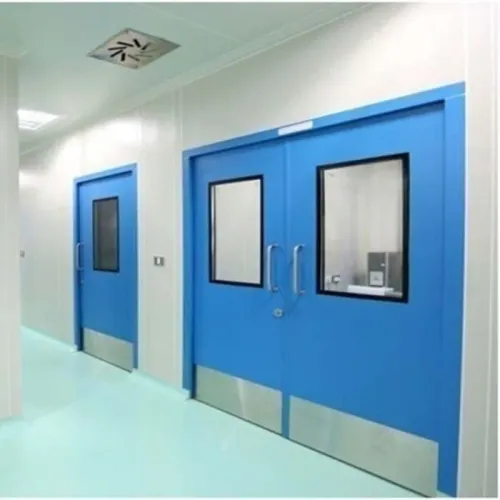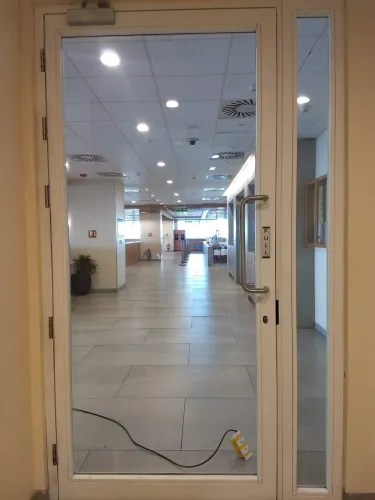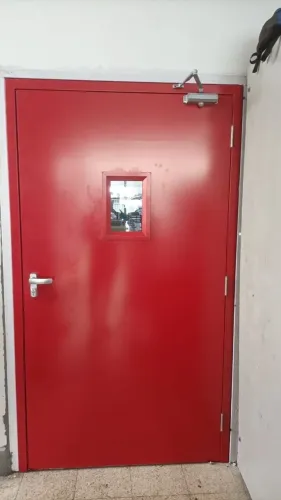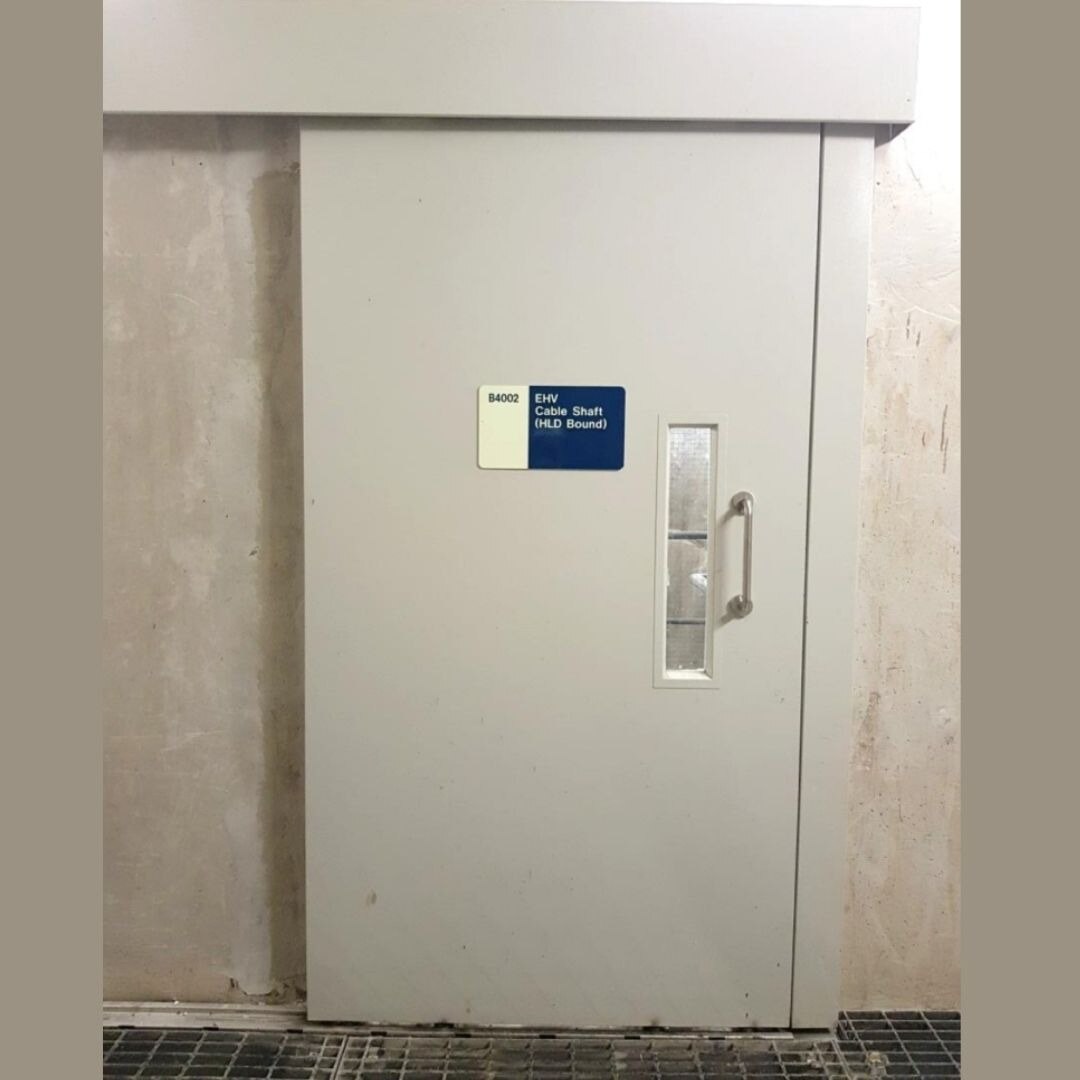
A damaged shaft door is a life-safety defect when it no longer closes, latches, seals or remains securely fixed to the rated wall opening. You will be able to inspect the assembly, decide whether repair is defensible, isolate the opening safely and specify a replacement with evidence that the approving authority can verify.
Key takeaways
- Photograph the certification label, frame, wall interface and hardware before altering the door.
- Replace doors with damaged labels, warped leaves, failed hardware or compromised fire-resisting construction.
- Protect an out-of-service shaft opening with a controlled temporary barrier and documented fire watch.
- Give the manufacturer clear opening, wall, rating, hardware and installation measurements.
How do you assess fire rated shaft door damage on site?
1. Start with the existing certification label. Photograph both faces, the frame, wall interface and hardware before cleaning, repainting or straightening anything. Record the label’s rating, manufacturer, serial or batch reference, and reason for inspection.
2. Inspect the leaf for bending, drilled holes, cut edges, split seams, impact marks, corrosion perforation and fire exposure. Inspect the frame for twisting, loose anchors, cracked welds, open joints and gaps between the frame and shaft wall.
3. Operate every hinge, latch and closer. The door must swing freely, close fully without assistance and latch into the strike. A visible label does not make a failed latch safe.
4. Check intumescent and smoke seals for missing sections, paint buildup, cuts, compression and separation from the frame. Examine the vision panel for cracked glazing, loose beads or an unapproved replacement.
5. Record the fusible link or other release device, its condition and its connection to the required fire alarm or detection system. Do not test or disconnect it without controlling the impairment.
6. Measure head, jamb and bottom clearances; do not describe the fit as “acceptable.” The complete assembly and adopted NFPA 80 edition control the permitted values, with 1/8 inch at head and jambs and about 3/4 inch at the bottom serving as common reference points.
This evidence defines the fire rated shaft door damage before repair. It also exposes damage around the opening that a replacement leaf alone cannot correct.
When should you repair the door, and when is shaft fire door replacement safer?
Treat a door that will not close and latch without assistance as a life-safety defect, even if its certification label remains visible. Remove it from service for assessment when you find:
- A bent leaf, distorted frame, torn-out hinge or failed latch
- A closer that no longer controls closing
- A missing seal, cracked weld or corrosion perforating the steel
- Fire exposure or damage affecting the frame, anchors or shaft-wall interface
Repair is defensible only when the listing holder or manufacturer provides an approved method for that exact damage, and the repaired assembly remains within its tested size, hardware and installation limits. Do not assume that a welded reinforcement, replacement lock, access-control drilling or added vision panel preserves the rating.
Cosmetic scratches, removable paint damage and minor surface corrosion remain repairable after you confirm that the assembly operates correctly and its tested components are sound. Specify shaft fire door replacement instead of a leaf-only fix when the frame, anchors, wall interface or several operating parts are damaged.
Never wedge, tie or electronically hold the door open. Use a hold-open and release arrangement only when the complete system is listed for the assembly and connected to the required fire alarm or detection system.
How do you protect the shaft opening while the door is out of service?
1. Before removing the door, notify the building fire-safety team, facility manager, security desk and every occupant who uses the shaft access route. Record the opening as impaired in the site fire-safety log and follow the building’s impairment procedure, including notification to the approving authority or fire service when required.
2. Install a rigid, visible barrier around the opening and display this sign: “Fire-rated shaft door out of service—authorised access only”. Warning tape alone is not a control. Assign a trained person to control every entry while the shaft remains exposed.
3. Remove combustible storage and waste from the area, and prohibit hot work beside the opening. Use a temporary smoke- and fire-protection arrangement only after the responsible fire-safety professional accepts it.
4. Do not substitute plywood, a standard steel panel, a curtain or a padlocked barrier and call it a fire door. Maintain the required fire watch for the building’s documented impairment period, test communication arrangements and keep the route clear for emergency responders.
5. Reinstall the approved assembly promptly. Before removing the impairment notice, record the repair or replacement, installed hardware, seal condition, closing and latching test, and final inspection. A visible barrier controls access; it does not restore the shaft’s fire protection.
Which replacement or door type can preserve a rated shaft opening?
Use a replacement shaft door when the original function, opening size and listed configuration remain available. Confirm the required opening-protective rating from the approved fire strategy, the applicable code table and the shaft-enclosure wall rating. Do not infer it from occupancy or “fireproof.”
| Option | What it means | When it applies |
|---|---|---|
| Replacement shaft door | A complete listed or tested assembly matching the opening | The original function, size and configuration remain available |
| Approved repair kit | Components and instructions issued for a defined assembly | Limited damage matches the kit’s exact model and repair limits |
| Standard steel access door | A non-rated or differently tested door | Unsuitable unless its own assembly covers the required rating and wall installation |
| Fire shutter | A shutter system with its own tested operation | Not interchangeable with a hinged or vertically acting shaft door |
| Smoke-control door | A door tested for smoke movement | Does not automatically provide the required fire resistance |
| Rated access panel | A smaller panel assembly | Not equivalent to a full-height shaft-enclosure door |
Demand evidence for the complete assembly: leaf, frame, hinges or suspension, latch, closer, seals, glazing, anchors, wall interface and installation method. Compare the label, test report, hardware schedule, size range, wall construction and release arrangement with site conditions.
For an Indian project, identify the Indian, European or North American fire-test standard and edition supporting acceptance. Obtain written confirmation from the project consultant and approving authority before ordering.
What must you measure and request from a Chennai shaft-door manufacturer?
A quotation is only as reliable as the site record behind it. Give the manufacturer dimensions, photographs and access requirements before it proposes a replacement.
1. Measure the clear opening width and height, wall thickness and construction, frame throat, reveal, sill condition and floor level. Record the hinge side, swing direction and every fixing location, including anchor spacing and any damaged fastener.
2. Photograph the label before removal, plus both frame anchors, wall lining, threshold, hardware and every damaged area. State whether the shaft needs personnel access, equipment access, a restricted-access panel, automatic release or a specific access-control interface.
3. Ask a fire door manufacturer fire rated shaft door for damage in Chennai to provide the exact test report or listing, fire-rating certificate, installation instructions, maintenance schedule, hardware schedule, material specification, permitted dimensions, label format and traceable identification such as a serial or batch reference.
4. Ask a fire shaft door supplier in Chennai to identify the wall type, anchors, installation clearances, seals, closer, latch and release device covered by that evidence. Confirm that it covers the proposed door type, size and access-control hardware.
5. Reject the assumption that fire door manufacturer shaft doors in Chennai means the proposed configuration is tested. Compare the submission, including wall installation, with the measurements. Rock Miller Doors belongs in the same tender comparison when its documents are checked against those records.
Choose the supplier that connects the replacement leaf, frame, hardware and wall installation to one verifiable tested assembly, rather than offering only a duration claim.
Related product
 | Fire Door Fire rated Shaft Doors / Fire Shaft Door RM Shaft Doors are an excellent example of our organization's Premum-quality results. View product → |
Frequently asked questions
How do you assess fire-rated shaft door damage on site?
Photograph both door faces, the frame, wall interface and hardware before cleaning or straightening. Record the certification label’s fire rating, manufacturer, serial or batch reference, and inspection reason. Check the leaf, frame, hinges, closer, latch, vision panel, seals, anchors and surrounding wall for damage or gaps.
When should you repair a fire-rated shaft door, and when is replacement safer?
Repair when the certified assembly remains identifiable and the damage is limited to replaceable hardware or components approved for that assembly. Choose shaft fire door replacement when the label is missing or unreadable, the leaf or frame is distorted, fire-resisting materials are compromised, or the assembly cannot be restored and documented.
How do you protect the shaft opening while the door is out of service?
Restrict access, install a secure temporary barrier that does not conceal an unsafe opening, notify the responsible fire-safety team and document the impairment. Follow the building’s fire-watch and impairment procedure until a tested, rated door assembly is installed and accepted.
Which replacement or door type can preserve a rated shaft opening?
Specify a tested, labelled shaft-door assembly that matches the required fire rating, wall construction, opening direction, exposure conditions and hardware. Do not substitute a standard access panel or non-rated service door for a fire-rated assembly.
What must you measure and request from a Chennai shaft-door manufacturer?
Provide the structural opening width and height, wall thickness and material, frame depth, clear passage, sill and head conditions, door swing or access direction, hardware clearances and surrounding obstructions. Request the fire-rating evidence, certification label details, installation method, compatible hardware list, maintenance instructions and site-measurement confirmation.