A CBRI reference alone does not prove that the shaft door offered to you matches the tested assembly. By checking the test basis, fire rating, wall interface, hardware, installation records and supplier capability, you can compare quotations on evidence rather than on labels such as “two-hour” or “certified.”
Key takeaways
- Ask for the complete CBRI test report, not a certificate number alone.
- Specify shaft opening size, exposure side, fire rating and doorset configuration.
- Match door leaf, frame, hinges, closer, lock and seals to the tested assembly.
- Inspect installation, record acceptance evidence and schedule routine fire-door checks.
What CBRI evidence should a shaft-door quotation contain?
A quotation for CBRI-certified fire doors in Chennai is incomplete if it says only “CBRI approved” or “two-hour fire door.” A brochure, manufacturer declaration, certificate number without its report, or certificate for another model does not prove that the offered shaft doorset was tested.
Request these documents and match every field to the quoted assembly:
- The complete CBRI report, showing report number, issue date, testing laboratory, test standard and report scope.
- The exact door model, leaf and frame construction, tested leaf dimensions, frame profile, wall type and installation method.
- The fire rating in minutes, including integrity and insulation, plus exposure direction and whether the test covered one or both faces.
- The tested hardware schedule: hinges or pivots, latch, lock, closer, seals, threshold and anchors. A certificate for a door leaf alone does not certify the installed leaf, frame and hardware as a doorset.
- The permitted size range, site modifications and exclusions, such as access-control devices, vision panels or powered operators.
Check the applicable edition of IS 3614 and the National Building Code of India, Part 4 for the project specification. CBRI is the testing laboratory; IS 3614 is the Indian specification basis. BS 476, EN 1634-1 or UL evidence is separate test evidence and needs consultant acceptance.
Ask the same scope from every supplier of certified fire doors in Chennai.
How should the shaft opening and fire rating be specified?
A two-hour exit door claim does not automatically justify a two-hour shaft door. For lift shafts, service risers, electrical shafts, plumbing ducts, cable risers and refuse shafts, select the opening protection from the shaft-enclosure rating and the building fire strategy, then confirm the required exposure direction.
| Rating element | What it establishes | What it does not establish |
|---|---|---|
| Integrity | Resistance to flames and hot gases for the stated minutes | Acceptable temperature on the unexposed face |
| Insulation | Limits temperature rise on the unexposed face for the stated minutes | Smoke leakage performance |
| One-face exposure | Performance with fire applied from the tested side | Performance from the opposite face |
State whether fire exposure is from one face or both faces. Specify the exact opening width and height, single- or double-leaf arrangement, tested shaft-wall construction, and the required integrity and insulation periods.
A fire door supplier must also identify smoke-leakage requirements where lift, pressurised or service-shaft smoke control makes them relevant; a fire-resistance report alone does not prove smoke-tightness.
Include the sill or threshold detail and say whether frequent access, trolley movement or large equipment requires more than a standard personnel door. An access panel, shutter, sliding door or removable panel cannot inherit a report for a hinged doorset, and a small single-leaf test does not cover a larger double-leaf opening.
Finally, specify separate approved fire stopping around cables, pipes, ducts and trays. The shaft door rating cannot legitimise an unsealed penetration.
Which shaft-door construction and hardware details must match the test?
Steel thickness does not establish a shaft door’s fire rating; the tested doorset does. Compare the proposed leaf, frame, hinges or pivots, astragals, intumescent and smoke seals, vision panels, locks, latches, strikes, closer, anchors, packers and wall connection with the CBRI report.
Use this assembly checklist before accepting a quotation:
- Confirm the leaf size, weight, construction, maximum tested width and height, and permitted site adjustments.
- Match the frame profile, material, anchors, packers, grout or fire-stopping, and threshold clearances.
- Match every hinge, pivot, lock, latch, strike, closer and astragal; a substitute item needs documented acceptance.
- Check that vision panels, access panels and inspection openings appear within the tested scope.
- Verify smoke seals and intumescent seals remain continuous around the leaf and frame.
| Report detail | Proposed installation | What to reject |
|---|---|---|
| Tested dimensions | Opening within the report maximum | “Same rating” with larger dimensions |
| Hardware schedule | Identical or approved components | Unlisted lock, closer or powered operator |
| Wall and frame fixing | Tested anchors, packers and fire-stopping | Unspecified fixing method |
| Closing function | Self-closing and positive latching after installation | Door held open or latch defeated |
Test emergency release, fire-alarm release and lift interfaces without compromising closing or latching. Hold-open devices, access-control settings and powered operators that prevent closure defeat compartmentation. Specify corrosion protection—coating system or stainless-steel hardware—for humid plant rooms, basements, parking levels and coastal Chennai.
A fire rated shaft door manufacturer in Chennai should identify these limits, not reduce comparison to steel gauge or price.
How can you compare Chennai suppliers beyond the catalogue rating?
A fire rated shaft door manufacturer in Chennai is not automatically the same as a local fire shaft door supplier in Chennai or a reseller. Ask who makes the leaf and frame, who owns the tested design, and whether the offered assembly is imported, locally fabricated, or only installed.
| Supplier type | Evidence and responsibility | Questions to test |
|---|---|---|
| Manufacturer | Makes the leaf and frame; provides model, batch and report traceability | Can it survey the opening, supply replacement hardware and match the tested shaft wall? |
| Fabricator | Builds to another party’s tested design | Is the fabrication controlled, and do dimensions, hardware and frame profile match the report? |
| Importer | Supplies an overseas-tested assembly | What is the lead time for doors, spares, warranty work and approved hardware? |
| Reseller or installer | May coordinate supply without manufacturing | Who is responsible for installation records, installer competence and defects? |
Compare site-survey capability, lead time, warranty service, coating or stainless-steel options, and experience with the actual blockwork or drywall shaft system. A substituted anchor, sealant or wall can undermine the test’s relevance.
Require every quotation to state:
- Tested rating, report identification and maximum opening dimensions
- Leaf, frame profile, hardware, closer, sill or threshold and finish
- Installation method, inspection access, fire-stopping and handover documents
Rock Miller Doors should be asked for this same evidence and scope as every competing supplier; its Chennai location does not replace independent verification.
Related products
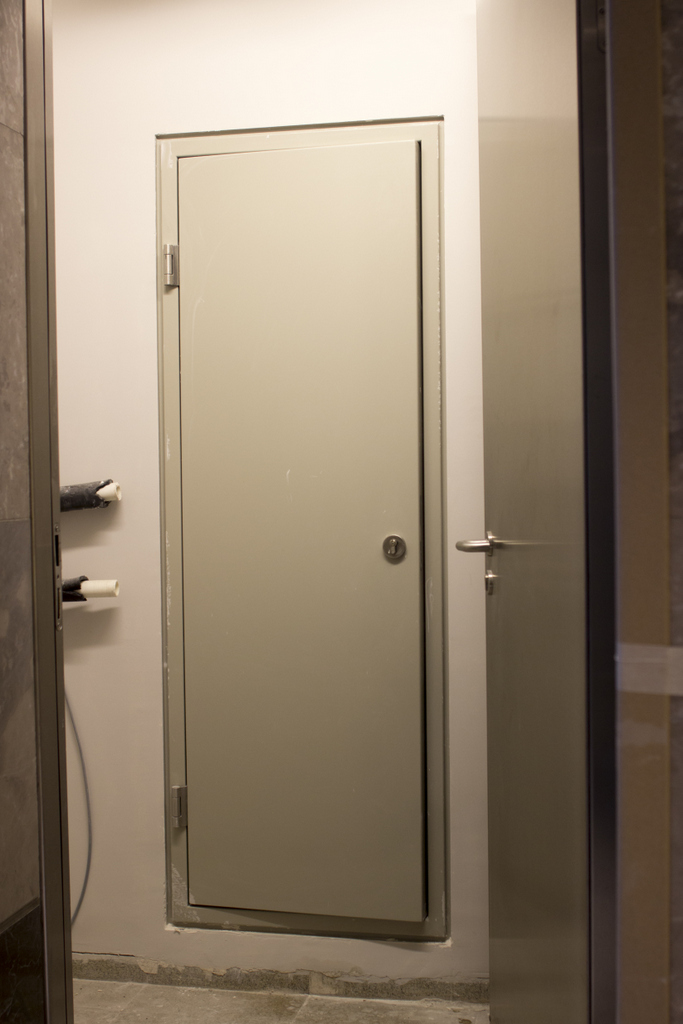 | Fire Door Fire rated Shaft Doors / Fire Shaft Door RM Shaft Doors are an excellent example of our organization's Premum-quality results. View product → |
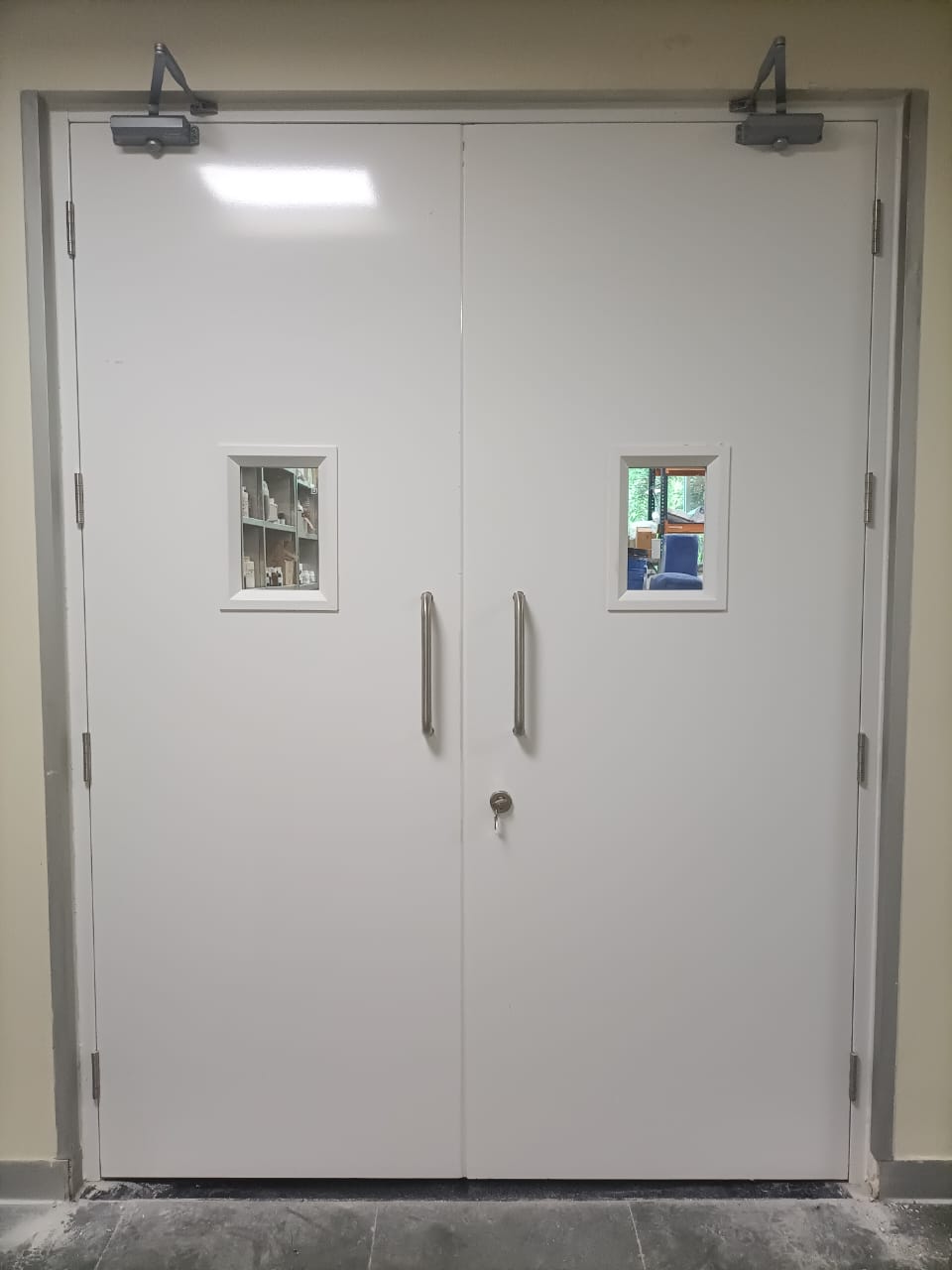 | Fire Door Fire prevention is our top priority for every building designer or architect. View product → |
What must happen before a shaft door is accepted and maintained?
Acceptance starts with an opening survey, not a brochure. For certified fire doors in Chennai, record the clear opening dimensions, wall or shaft-enclosure construction, exposure direction and required integrity and insulation rating. “CBRI certified fire doors in Chennai” is not enough: retain the complete CBRI test report and confirm that the installed assembly matches it.
1. Install the tested frame using the specified anchors, packers and fixing spacing. Do not substitute a frame profile or anchor system without documented approval.
2. Complete compatible grout or fire-stopping around the frame, cables, pipes and trays. Photograph concealed work before closing the finishes.
3. Fit the tested hinges or pivots, lock, latch, strike, closer, seals, threshold and any access-control hardware. Preserve intumescent and smoke-seal continuity at every joint.
4. Align the leaf, check clearances, and test self-closing and positive latching from every access position. A wedge, misaligned strike or weak closer defeats compartmentation.
5. Record commissioning results, including closing time, latch engagement, emergency release, alarm release, signage and smoke-control interfaces.
6. Handover must include the complete test report, certificate of conformity, product and hardware schedules, installation drawings, installer records, concealed fire-stopping photographs, fire-door register and maintenance instructions.
Inspect closer action, hinges, seals, latch alignment, corrosion, impact damage, wedging and unauthorised alterations at the specified intervals. Laboratory evidence proves tested performance; the consultant or authority decides project acceptance, including access control, signage, smoke control and emergency-release requirements.
Frequently asked questions
What CBRI evidence should a shaft-door quotation contain?
Request the complete CBRI test report, certificate or licence details, tested model identification, fire-rating result and evidence that the quoted doorset matches the tested assembly. A brochure, manufacturer declaration or certificate number without its report is not sufficient proof.
How should the shaft opening and fire rating be specified?
State the clear opening width and height, wall construction and thickness, frame dimensions, number and handing of leaves, exposure side, and required fire-resistance period. Name the test classification and identify whether the rating applies to the complete doorset or only the door leaf.
Which shaft-door construction and hardware details must match the test?
Compare the quoted leaf thickness and materials, frame profile, hinges, closer, lock or latch, intumescent seals, smoke seals, vision panels and fixing method against the CBRI-tested configuration. Substituting hardware can invalidate the evidence.
How can you compare Chennai suppliers beyond the catalogue rating?
Compare report traceability, production drawings, installation method, site-measurement process, installer competence, hardware availability, replacement-seal support, response time and inspection records. Confirm that the supplier can deliver the exact tested configuration for your shaft opening.
What must happen before a shaft door is accepted and maintained?
Inspect the installed frame, leaf gaps, anchors, seals, closer action, latch engagement, signage and self-closing performance. Record the as-installed configuration, retain certification documents and inspect the doors regularly for damage, wedging, failed seals and defective hardware.
Related products
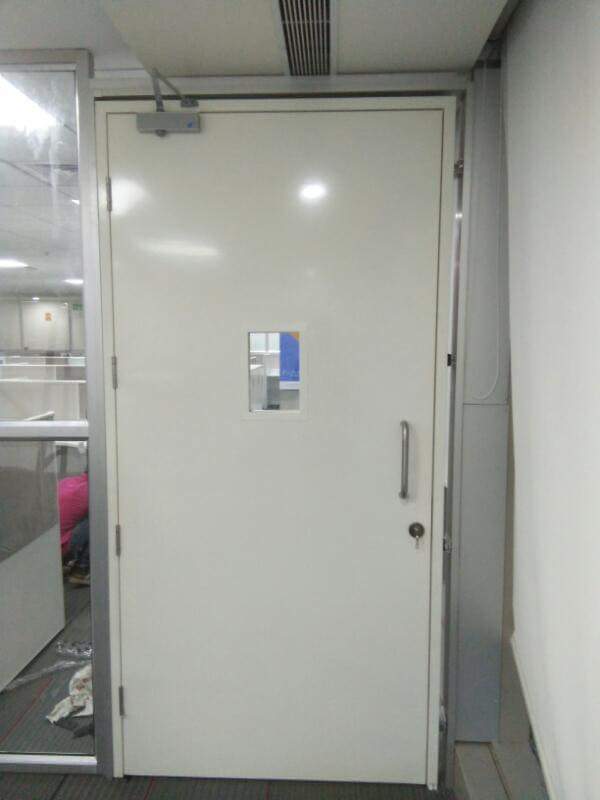 | Fire Door Fire Doors with Door Fittings View product → |
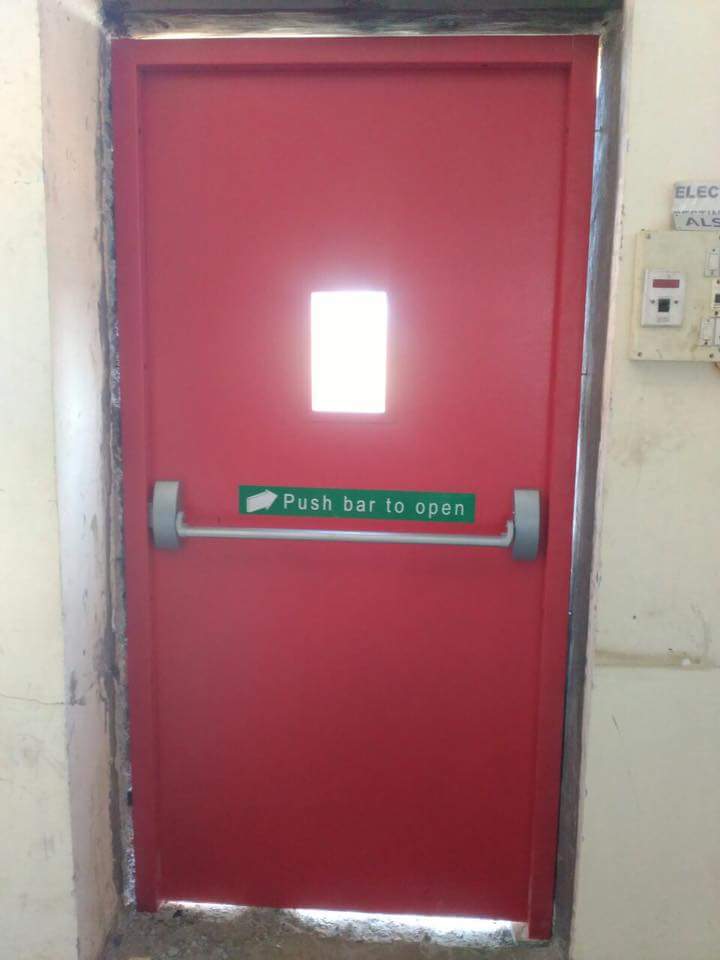 | Fire Door Fire Exit Doors / Emergency Exit Door Rock Miller Doors are designed to protect lives in the event of a fire-related disaster for up to two hours. View product → |