A glazed sliding door is suitable for a food facility only when its complete doorset has the required fire, smoke, hygiene and corrosion performance. By the end, you will be able to match the opening to its wall rating and use, verify test evidence, and write a specification that survives washdown, traffic, inspection and local approval.
Key takeaways
- Specify the complete tested doorset, not a fire-rated glass panel alone.
- Request test evidence covering the leaf, frame, seals, track, guides and hardware.
- Match the fire rating to each area’s fire strategy and compartment boundary.
- Detail hygienic finishes, cleanable tracks and protected closing mechanisms.
What counts as a fire-rated glazed sliding doorset?
A fire rated glazed sliding doorset is a tested assembly, not a glass panel placed in a stainless-steel sliding door. Its evidence covers the glazed leaf, frame, track, floor or overhead guides, perimeter seals, hardware, closing mechanism, hold-open release and mounting details as one configuration.
Stainless steel, automatic operation, a glazed panel or self-closing movement does not prove fire resistance. A hygienic sliding door may suit routine separation between processing rooms; fire doors for food facilities are required where the opening penetrates a fire compartment, protected route or smoke barrier.
The rating applies only to the complete listed configuration. It cannot upgrade an unrated wall, frame opening or surrounding construction, and replacing the specified glass, seals or hardware can invalidate the tested performance.
Before comparing suppliers, confirm:
- Wall construction and its required fire-compartment or smoke-barrier rating.
- Clear opening dimensions, including height, width and available headroom.
- Panel arrangement, such as single sliding, bi-parting or telescopic leaves.
- Permitted installation details for the track, guides, seals, hardware and fixing substrates.
A listed fire rated glazed sliding doors assembly must match those conditions; a catalogue claim for fire rated glazed sliding doors alone is not enough.
Which test evidence proves the door will perform in a fire?
Ask for evidence for the complete doorset, not a glass sample: integrity and insulation ratings in minutes, smoke-control classification where required, the test standard, laboratory report number, certificate or listing, field-of-application limits, and installation instructions. The documents must name the leaf, frame, track, guides, seals, hardware and closing mechanism.
| Standard | What it establishes | Do not assume |
|---|---|---|
| IS 3614 | Indian fire-resistant door assemblies | It is not automatically replaced by an EN or UL report in Chennai |
| EN 1634-1 | Fire-resistance testing of door and shutter assemblies, including integrity and insulation | It is not EN 16034 product conformity |
| EN 16034 | Product performance and conformity for windows, doors and shutters | It does not replace the fire test |
| UL 10B | Fire-door assembly testing under neutral-pressure conditions | It does not prove positive-pressure performance |
| UL 10C | Fire-door assembly testing under positive pressure | It does not prove air-leakage performance |
| NFPA 80 | Installation, inspection and maintenance of fire-door assemblies | It is not a fire-test certificate |
| NFPA 105 | Smoke-door assembly requirements | It does not replace UL 1784 leakage evidence |
| UL 1784 | Air leakage of door assemblies and other opening protectives | A fire rating alone proves no smoke-leakage class |
Fire-protection glazing limits flame and hot-gas passage; fire-resistance glazing also limits heat transfer as part of a barrier. Wired, ceramic, laminated and insulated fire-resistant glass differ in integrity, insulation, visible-light transmission and impact performance. Require the listed glass type: ordinary laminated, tempered or wired glass substituted on site voids the tested configuration.
Ask how damaged glazing, seals and hardware are replaced without changing that configuration. For fire rated glazed sliding doors and glazed sliding fire doors in chennai, obtain written acceptance from the authority having jurisdiction before treating Indian, EN or UL evidence as equivalent.
How should you choose the rating for each food-facility area?
Choose the best fire doors for food facilities by matching each doorset to the wall or barrier rating, occupancy hazard, smoke risk, escape function and traffic pattern—not by using one rating across the plant.
| Wall or barrier rating | Common IBC opening-protective comparison |
|---|---|
| 1 hour | 45-minute door |
| 2 hours | 90-minute door |
| 3 hours | 180-minute door |
These figures are comparison points, not approval. Confirm the adopted International Building Code edition, local amendments and authority requirements before specifying fire rated glazed sliding doors for food facilities; a rated doorset cannot upgrade an unrated wall or opening.
- Production and packaging rooms: assess compartmentation, smoke movement and washdown traffic.
- Cold stores: verify low-temperature operation, condensation control, seal performance and emergency release.
- Kitchens and boiler rooms: assess heat, grease, fuel and equipment hazards, then specify the required insulation period.
- Warehouses and loading bays: specify impact resistance, clear opening, forklift protection, pest sealing and reliable closing.
- Escape routes: confirm egress hardware, fail-safe or fail-secure behaviour, power-failure operation and unobstructed travel.
Do not wedge fire doors for food facilities open. Where traffic demands an open position, use a listed or approved hold-open device coordinated with the fire-alarm or detection release, so the door closes on the required signal.
Can the glazing and sliding mechanism meet food-hygiene demands?
Yes—but the sliding mechanism is often the sanitation failure point in fire rated glazed sliding doors, not the glass. Flour, meat residue, moisture and cleaner can collect in floor tracks, rollers, bottom guides, open cavities, ledges, exposed fasteners and poorly sealed joints.
1. Specify flush surfaces, crevice-free frames, protected or accessible hardware, cleanable tracks and no exposed dirt traps. Use a drainable threshold only where the listed fire assembly permits it; a hygienic alteration can invalidate the listing.
2. Define the cleaning challenge: foam cleaner, disinfectant, high-pressure washdown, moisture, food residues, temperature and chemical concentration. Name the stainless grade, surface finish, weld quality, fastener material and sealant compatibility.
Treat 304 stainless steel as a specification to verify, not an automatic answer; wet, salty or acidic processing can justify 316 stainless steel or another corrosion-resistant finish.
3. Obtain the manufacturer’s tested chemical, temperature, pressure and cleaning limits. Do not infer them from “stainless steel,” and do not assume a fire rating protects degraded seals or corroded hardware.
4. For a large vision panel, balance line-of-sight and supervision against more glass, seals, frame area and cleaning exposure. Specify the glass impact class, visible-light requirement, maximum panel size and a documented replacement procedure that preserves the tested configuration.
FDA food CGMP and Food Code sanitation, tight-fitting closure and pest-sealing duties remain separate from the fire listing. Confirm both before approving the fire doors for food facilities.
What should you put in the specification for a Chennai project?
Give the supplier a project schedule, not a product name. For glazed sliding fire doors in Chennai, identify the authority having jurisdiction: Tamil Nadu Fire and Rescue Services Department and the building sanctioning authority, such as CMDA or Greater Chennai Corporation.
Confirm the adopted Indian code, approval route and accepted evidence before comparing Indian, EN, UL or NFPA documents. NBC 2016 is a model framework; local approvals and current BIS requirements decide acceptance.
1. State the wall rating; door integrity and insulation periods; smoke-leakage classification; clear opening; maximum panel size; glazing type; impact requirement; track and floor or overhead guide arrangement; closing force; hold-open release; fire-alarm interface; power-failure behaviour; hygiene geometry; washdown regime; corrosion exposure; and maintenance access.
2. Request the complete test report, report number, certificate or listing, field-of-application limits, tested wall construction, hardware schedule and installation drawings. Do not treat EN 1634-1, EN 13501-2, UL or NFPA evidence as interchangeable without written local acceptance.
3. Match Rock Miller Doors’ proposed doorset against those documents, including the glass, seals, hardware and installation details. Evaluate the submitted configuration, not a catalogue claim.
4. Inspect at least annually under NFPA 80 where adopted, and after washdown, forklift impact, track contamination, seal replacement or hygienic modification. Accept the door only after fire, smoke, sanitation and operational reviews are signed off. This is how you select the best fire doors fire rated glazed sliding doors for food facilities.
Related products
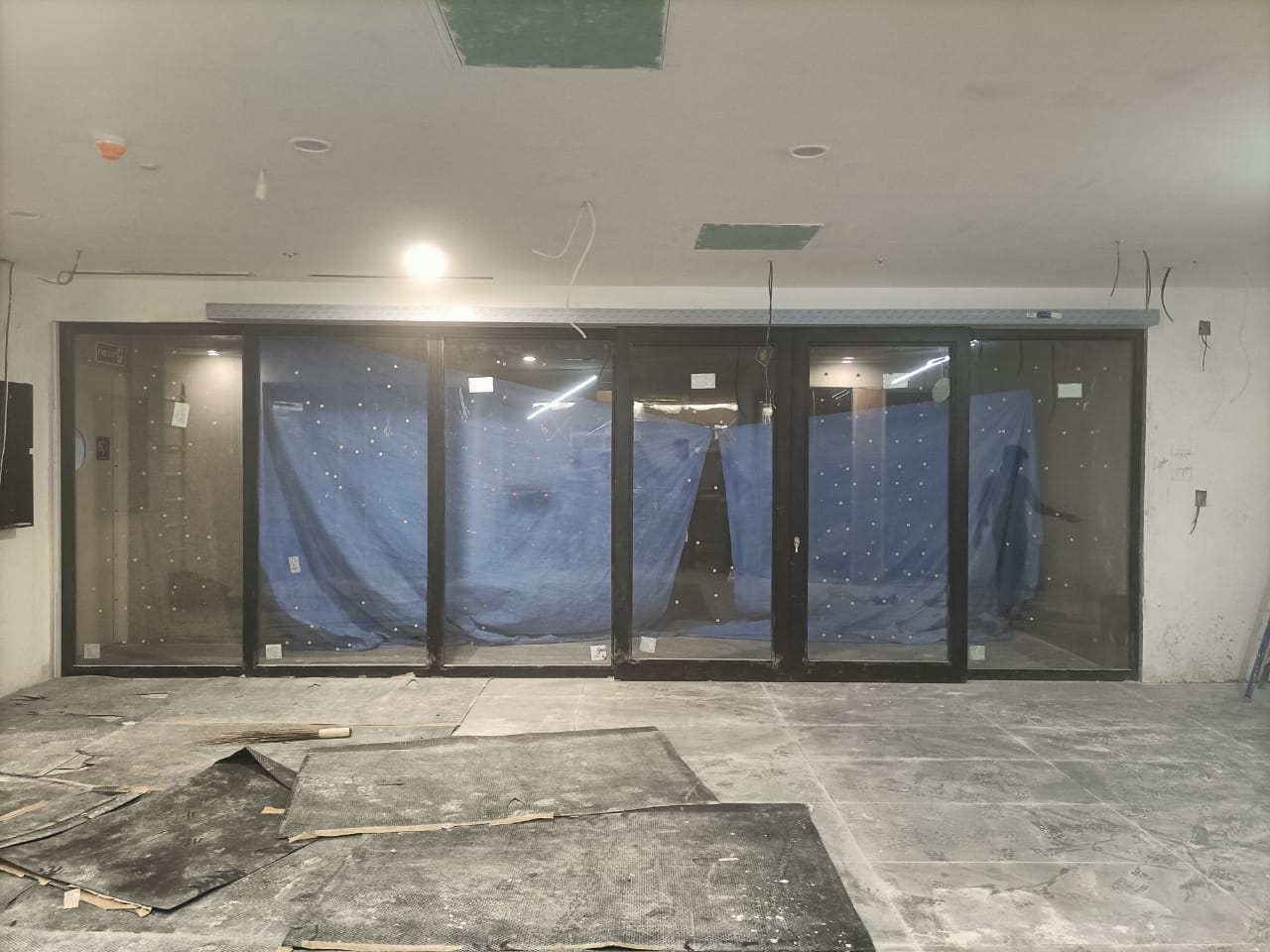 | Glazed Doors Depending on the level of protection needed, we may offer a wide range of glass and glazing solutions. View product → |
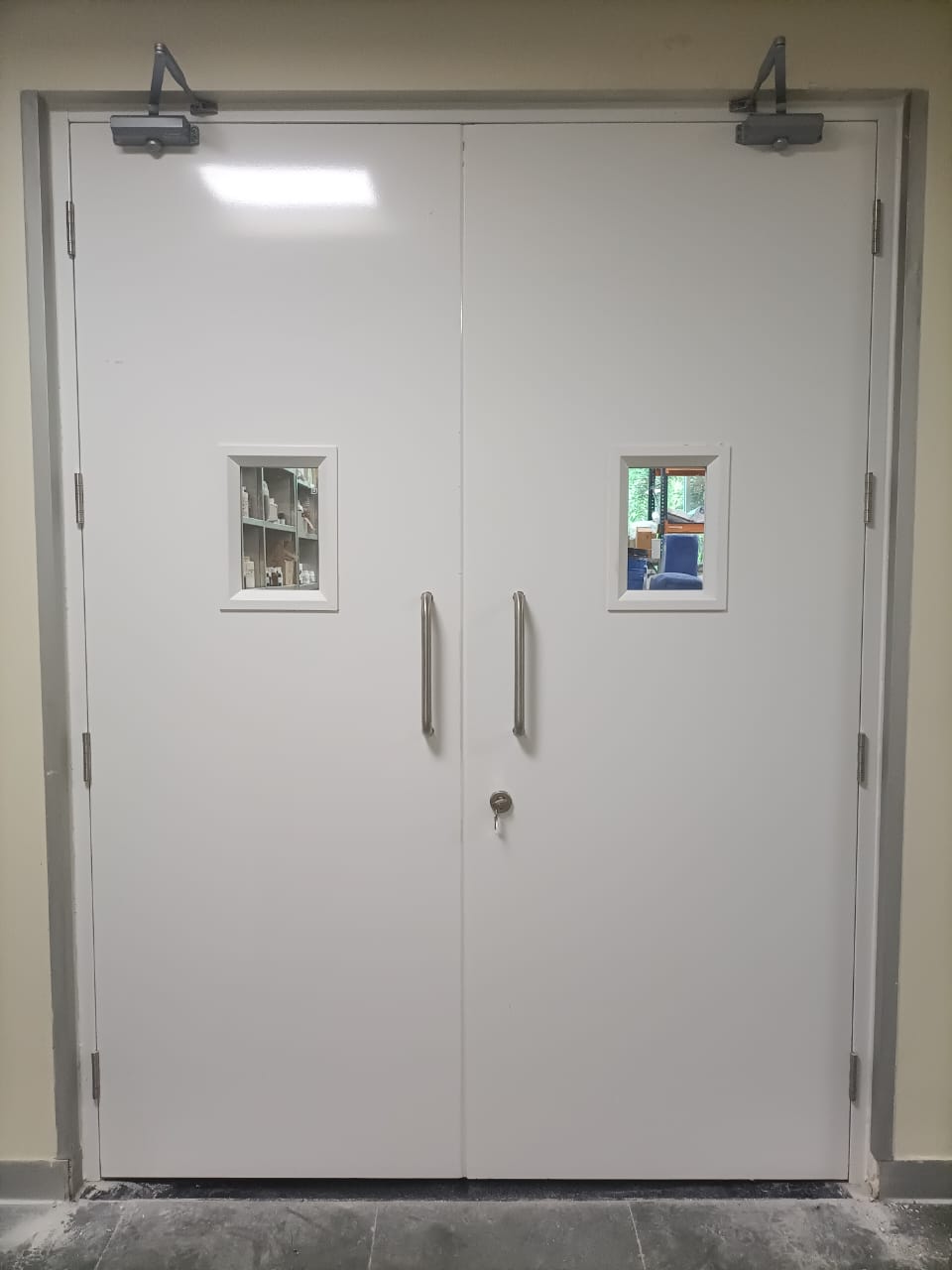 | Fire Door Fire prevention is our top priority for every building designer or architect. View product → |
Frequently asked questions
What counts as a fire-rated glazed sliding doorset?
It is a tested assembly comprising the glazed leaf, frame, track, guides, seals, hardware, closing mechanism, hold-open release and mounting details—not glass installed in an ordinary sliding door.
Which test evidence proves a glazed sliding door will perform in a fire?
Request the full fire-test report or classification document for the specified doorset configuration. Check that it identifies the glazing, frame, track, guides, seals, hardware, size, mounting arrangement and fire-performance period.
How do you choose fire-rated glazed sliding doors for a food facility?
Start with the fire strategy and compartment lines, then assign the required integrity and insulation period to each opening. Confirm that the tested sliding assembly also meets hygiene, cleaning and access requirements.
What should a Chennai project specification include?
State the fire-performance classification, opening size, wall construction, glazing, frame and finish, track and guide arrangement, seals, closing and release controls, inspection documents, installation method and maintenance requirements.