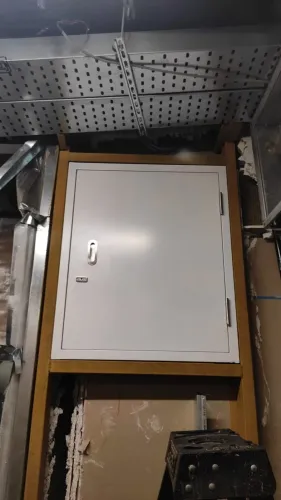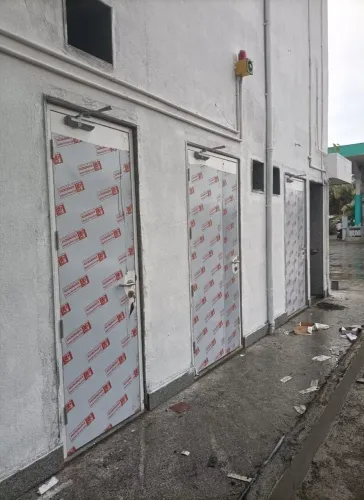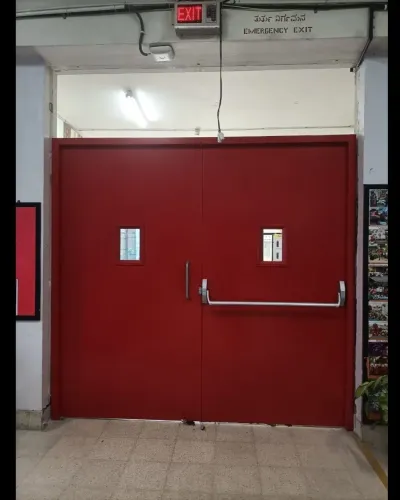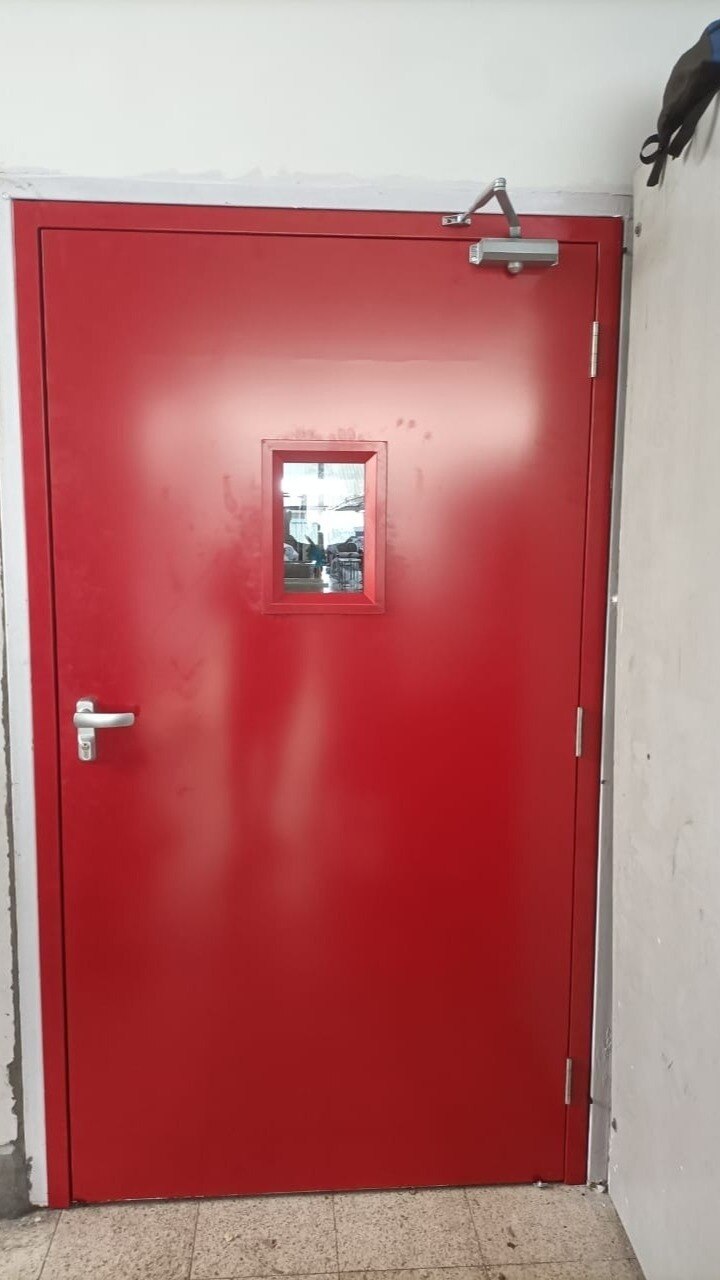
A shaft door closes the opening between a vertical service void and the occupied building, limiting the route through which flames and smoke can move between floors. By the end, you will know how shaft doors work, which evidence to request, and how to compare a supplier’s proposed doorset with your project’s fire strategy.
Key takeaways
- Confirm the tested doorset rating, not just the door leaf rating.
- Specify the shaft wall, frame, seals, hardware and access requirements together.
- Ask for the test report, certification documents and traceable product identification.
- Compare suppliers on tested assemblies, installation support and replacement-part availability.
What does a fire-rated shaft door protect?
A fire rated shaft door protects the separation between a vertical building void and the occupied floor or escape route. It closes the personnel-access opening so fire and hot smoke cannot use the shaft as a route between levels.
You may find these openings at:
- Lift shafts and lift-machine areas
- Service shafts and utility risers
- Electrical and plumbing risers
- Cable and pipe shafts
- HVAC shafts
- Refuse shafts
- Service cupboards
An unprotected opening creates a chimney effect. Rising hot smoke can move through the shaft and enter rooms or corridors on other floors, while flames can reach the shaft through an open maintenance door and spread vertically. The shaft door therefore forms part of the shaft enclosure, not merely a cover for equipment.
Metal shaft doors are commonly made with a steel leaf, steel frame and fire-resistant core. A painted metal access door is not automatically fire rated: the sheet-metal skin or core alone proves nothing. Fire performance belongs to the complete tested doorset, including its frame, hinges, closer, latch, seals, fixings and wall interface.
Omit an intumescent seal, leave excessive gaps or use an unapproved threshold, and hot gases can bypass the leaf. A shaft door is also normally for inspection and maintenance, not escape, unless it has been designed and tested for egress.
How does a shaft door differ from other fire-protection openings?
The opening’s purpose decides the product: fire rated shaft doors protect personnel access into a vertical void, while other openings protect different risks.
| Product | What it protects | When it applies |
|---|---|---|
| Shaft door | Inspection and maintenance access to a lift, cable, pipe, electrical, HVAC or refuse shaft | Use in the shaft enclosure; it is not an escape door unless designed, tested and equipped for egress |
| Standard fire door | A passage between occupied spaces, compartments or escape routes | Use where people regularly pass; provide egress hardware and direction of escape |
| Fire-rated service hatch | A small service opening through a fire-resisting wall or ceiling | Use for valves, controls or equipment access, not as a general personnel doorway |
| Access panel | Routine inspection access, with fire performance only when specifically tested | Use where the listed panel matches the wall or ceiling construction |
| Fire shutter | A large opening that closes vertically or horizontally during fire | Use for goods, serving or industrial openings; it is not a substitute for an egress door |
| Fire damper | An air-duct penetration through a fire-resisting element | Use inside the duct system; its certificate cannot certify a door |
Shaft doors may use hinged access-panel formats, single or double leaves, self-closing action, positive latching where required, and access from one or both sides. Metal shaft doors still need a tested frame and complete doorset.
Fire endurance does not automatically provide smoke control. Specify perimeter seals, threshold details, the smoke-leakage test or classification, and allowable leakage level separately.
What evidence proves that a shaft doorset is fire rated?
A catalogue phrase does not prove a fire rating. Evidence applies to the complete tested assembly: leaf, frame, hinges, closer, latch, intumescent or other listed seals, threshold, anchors and wall interface—not to a steel skin or core alone.
1. Ask for the named test standard and classification system. Under the European system, EN 1634-1 is a fire-resistance test and EN 13501-2 classifies results; an EI60 classification means 60 minutes of integrity and insulation. E60 means integrity only, so it is not the same claim.
Ask which system supports any 30-, 60-, 90- or 120-minute duration.
2. Request the test report number, fire-resistance duration, integrity result and insulation result. Confirm that the report covers fire rated shaft doors, not a different door type or a leaf tested without its frame and hardware.
3. Check the scope of application, including tested minimum and maximum sizes, leaf and frame profiles, glazing, hardware schedule, seal specification, threshold, clearances, anchors and fixing details.
4. Match the proposed wall to the report. Ask whether it covers masonry, lightweight partition or shaft-wall construction, and identify the permitted packers, anchors and frame installation method.
5. Request a separate smoke-leakage test or smoke classification when smoke containment matters. Fire endurance alone does not prove smoke control.
Changing glazing, frame profile, wall type, latch, seals, gaps or fixing details can move the installation outside the report. A fire rated shaft door manufacturer should identify every permitted variation in writing.
How should you specify and install shaft doors in India?
Start with NBC 2016, Part 4, Fire and Life Safety, then have the project fire strategy, fire consultant, local fire authority and approving authority confirm the accepted shaft-door assembly. For Chennai or another Indian project, those authorities determine the rating, test route and documents accepted; never infer approval from a catalogue statement.
- Wall build-up, opening size, clear opening, frame depth, wall tolerance, handing, installation side and service clearances
- Smoke requirement, listed hinges, closer, latch, seals, threshold, tested gaps, anchorage and permitted fixings
- Handover documents: fire test report or assessment, product label, installation instructions, approved hardware schedule and inspection record
- Site checks for omitted or cut-short seals, damaged seals, excessive gaps, field-cut penetrations, and doors held open by wedges or improvised magnets
| Wall interface | Installation controls | Common failure |
|---|---|---|
| Masonry | Use the tested frame, anchors, packers and fixing details; confirm solid bearing around the opening | Loose anchorage or unfilled voids transfer heat around the frame |
| Lightweight partition | Provide specified back-blocking, packers and permitted fixings before fitting the frame | A standard hollow-metal frame can pull away from the lining |
| Shaft wall | Match the tested frame depth, wall layers, access side and service clearances | Services or narrow riser walls force unapproved cuts and oversized gaps |
A top fire door supplier in India should identify the exact evidence for the proposed shaft doors, wall construction and hardware. Reject substitutions unless the test report, assessment or installation instructions expressly cover them. A product label cannot rescue a door installed outside its tested configuration.
How do you compare a top fire door supplier in India?
A top fire door supplier in India proves its suitability through evidence for the exact doorset, not a general catalogue, “premium quality” claim or the words “fire rated.” The search phrase “top fire door supplier in India shaft doors” is not a performance classification.
Compare suppliers against the same procurement questions:
| Criterion | Evidence to demand |
|---|---|
| Rating and test route | Required duration, named test standard, report number and tested configuration |
| Wall and size | Covered wall construction, maximum opening and frame dimensions |
| Smoke control | Smoke-leakage test or classification, perimeter seals, threshold and allowable leakage |
| Hardware | Listed hinges, closer, latch, seals, anchors and approved fixing details |
| Responsibility | Supplier named for the complete assembly, installation instructions and authority acceptance |
Ask whether the proposed fire rated shaft door manufacturer supplies every component, including the frame, anchors, seals, closer and latch. Confirm access direction, installation side, service clearances, tested gaps and permitted fixings. An incorrect shaft wall, missing back-blocking, oversized gap or substituted latch can invalidate a tested assembly.
Rock Miller Doors belongs in the comparison when its proposed shaft-door assembly is supported by project-specific test evidence and accepted by the fire consultant and approving authority.
After handover, record inspections using NFPA 80 as a reference. Check full closure from every open position, latch engagement, intact labels and seals, acceptable clearances, unobstructed operation and no wedges, improvised magnets or unapproved modifications. Maintenance staff who repeatedly open these doors can defeat compartmentation through one neglected defect.
Related product
 | Fire Door Fire rated Shaft Doors / Fire Shaft Door RM Shaft Doors are an excellent example of our organization's Premum-quality results. View product → |
Frequently asked questions
What does a fire-rated shaft door protect?
It protects the opening between a vertical shaft and an occupied floor or escape route, limiting fire and hot-smoke spread between levels.
How does a shaft door differ from other fire-protection openings?
A shaft door closes a personnel-access opening in a vertical service or lift shaft. Its frame, seals, hardware and wall interface must work as a tested doorset.
What evidence proves that a shaft doorset is fire rated?
Request the complete test report or certification, the tested fire-resistance period, scope of application, construction details and traceable product identification.
How should you specify and install shaft doors in India?
Define the required rating, opening size, wall construction, access method, smoke-control needs, hardware and installation details before ordering. Install the complete tested assembly and protect its labels and seals.
How do you compare a top fire door supplier in India?
Compare verified doorset evidence, compatibility with your wall and hardware, installation quality, documentation, technical support and access to replacement seals and components.